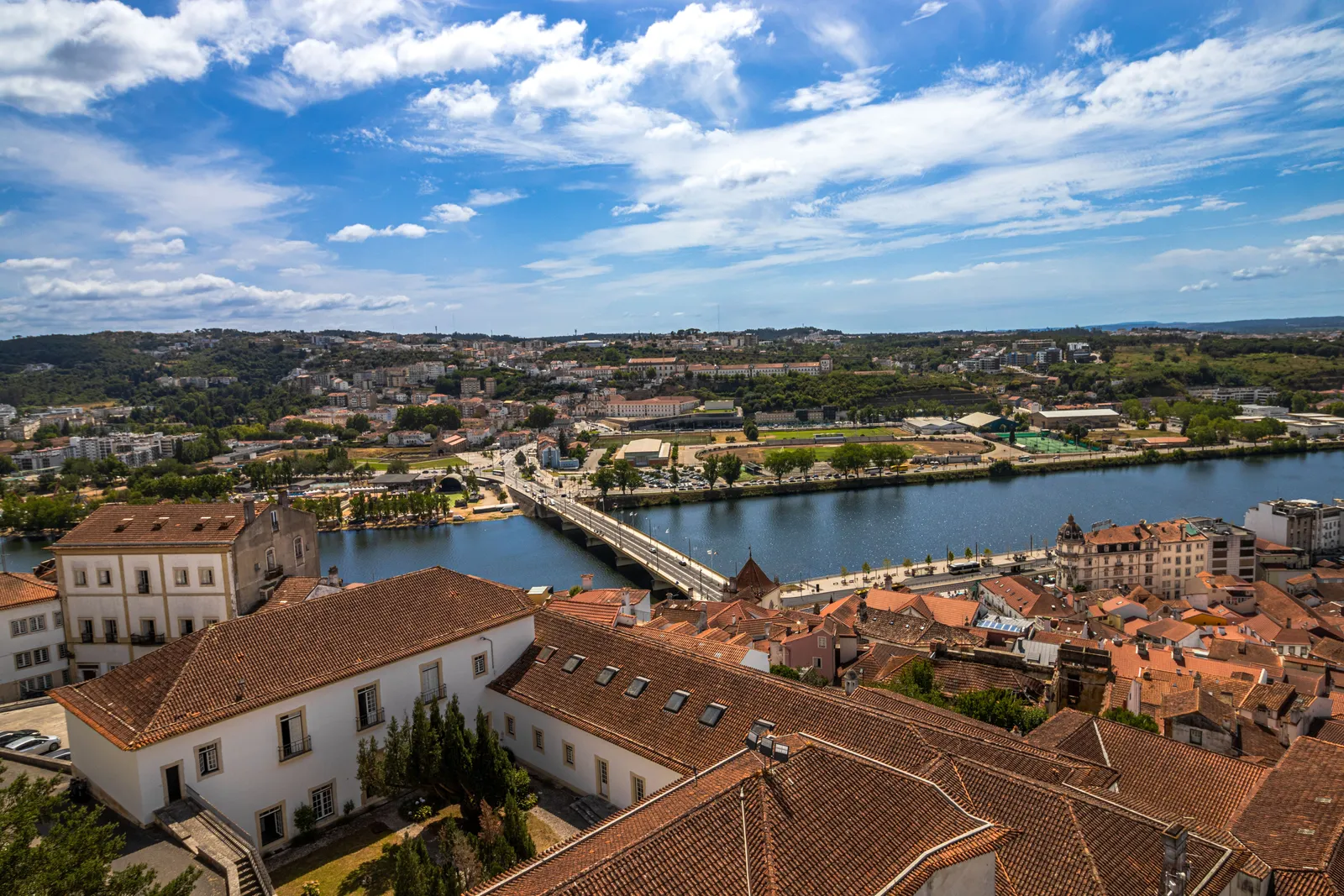
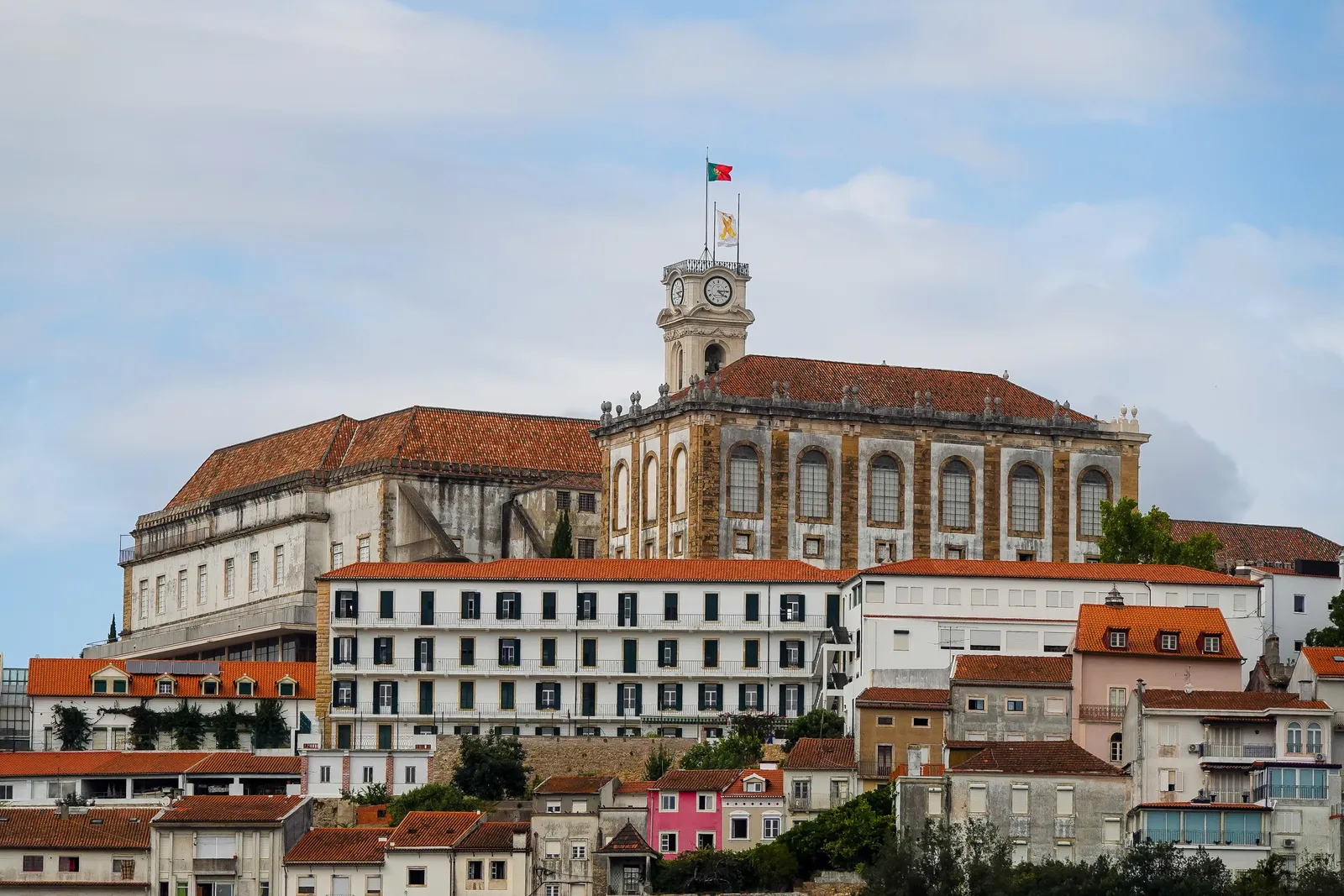
Coimbra is arranged the way a medieval city is: the university on top of the hill, everything else below it, and a steep walk in between. It has been a university town since the thirteenth century, which is old even by European standards, and the result is a small city that feels disproportionately grand. It is also sitting almost exactly halfway along the main railway line between Lisbon and Porto, which makes it the easiest thing in Portugal to add to a trip without losing a day.
What you actually come for
The Joanina Library, a baroque room of gilded woodwork and dark shelves, entered in timed slots because only so many people fit in it at once.
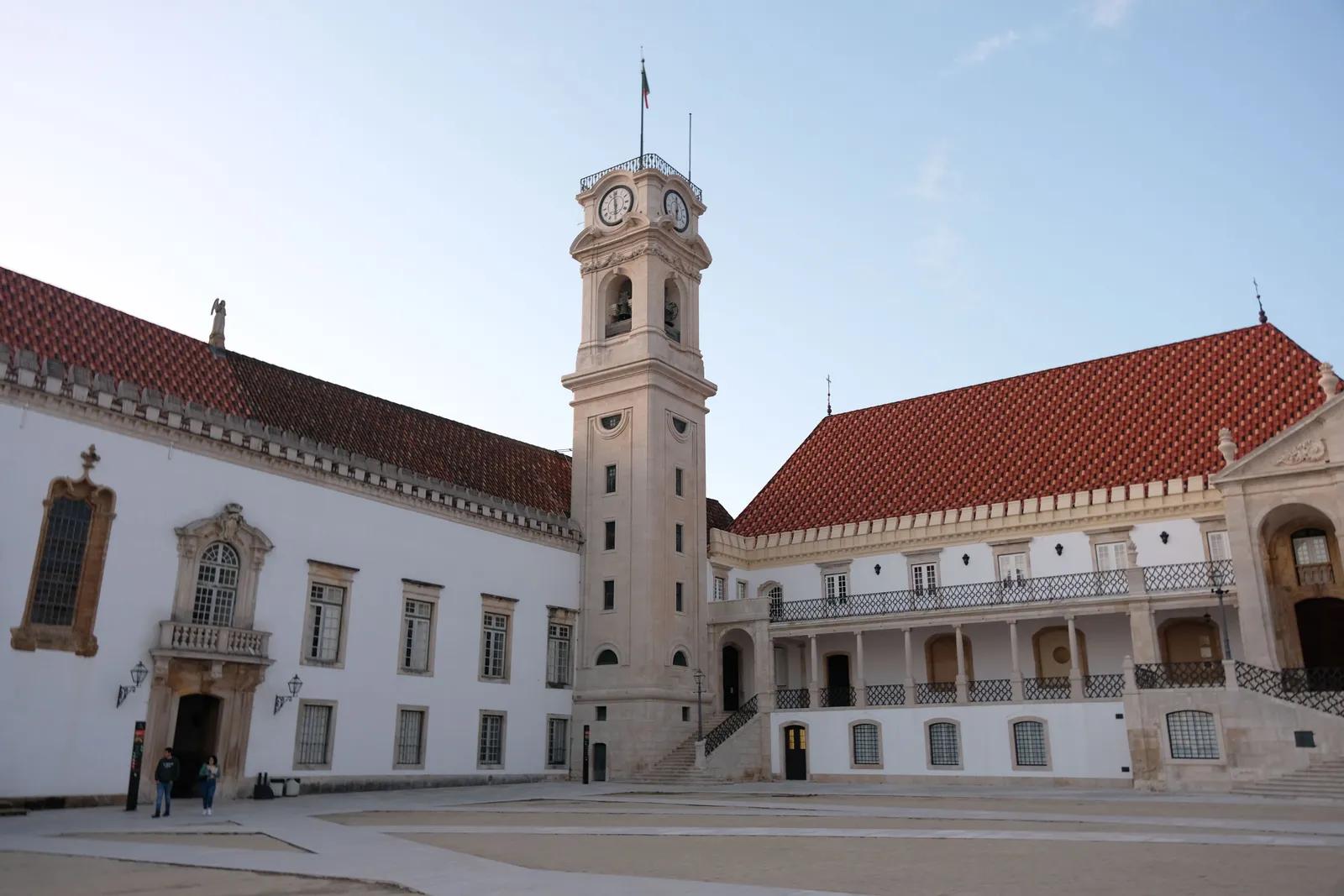
The university complex on the hilltop, including the ceremonial hall and the chapel, and a terrace with the whole city underneath it.
The old town, a tangle of stepped lanes running downhill from the campus to the river.
Coimbra fado, a student tradition sung in academic capes that has very little in common with the fado of Lisbon.
The library, and why it needs planning
The Joanina is the reason most people come, and it is the one part of the day you cannot leave to chance. Tickets are sold for a fixed entry time, numbers inside are capped, and in the summer months the slots are gone before the morning starts. Buy the combined university ticket online the day before, take the earliest slot you can, and build the rest of the visit around it rather than the other way round.
It is worth knowing what the ticket gets you: a short, controlled visit in a room you cannot linger in, preceded by the floors below, which are as interesting and far less rushed.
Fado, the other version
If you have heard fado in Lisbon, the Coimbra version will not sound like the same art form. It is sung by men, tied to the university, performed in the black capes students still wear, and accompanied by Portuguese guitar. The subject matter is student life and the city rather than longing for a lost neighbourhood.
The custom that catches everyone out is the applause, or the absence of it. At the end of a song the audience coughs rather than claps. It reads as rudeness for about ten seconds and then as one of the better traditions in the country.
Small venues in the old town run short evening performances aimed at visitors, which is a reasonable introduction; the university societies also perform, less predictably and more authentically.
The walk down, and the lower town
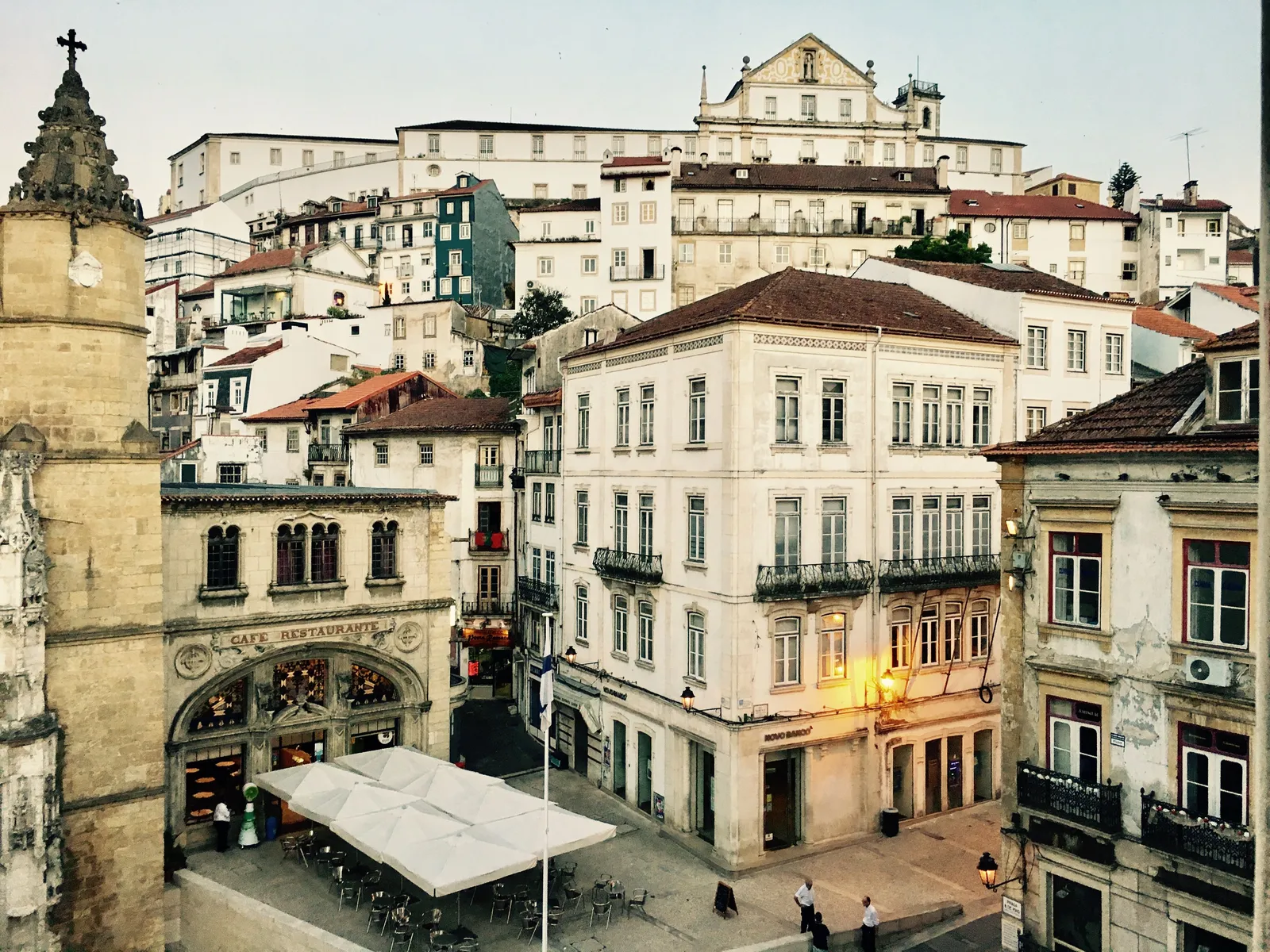
Almost everyone arrives at the top and leaves from the top, which misses half the city. The old town falls away from the campus in stepped lanes, past the old cathedral, through arches and under washing lines, and the walk down takes about twenty minutes at a wandering pace.
At the bottom it opens into the lower town, which is where the shops, the cafes and the ordinary weekday life are, and then into the riverfront. The contrast is the point: a monumental hilltop that belongs to the university, and a working town underneath it that does not.
Going up is the harder direction and there is a lift built into the hillside for it, which is worth knowing about in July when the stairs are in full sun.
Fitting it into the trip
The strongest argument for Coimbra is geography. Breaking the Lisbon to Porto journey here costs almost nothing in travelling time and converts a transfer into a half day of sightseeing, which is exactly the move our one week Portugal itinerary is built around.
As a pure day trip it also works, though it is a longer round trip than the usual options from Lisbon; if you are comparing, our guide to Évora and the Alentejo covers a day trip of similar length in the opposite direction, across the plains rather than up the coast.
The rest of the centre
Coimbra is the obvious stop in central Portugal, but it is not the only one: the region between the two big cities holds Roman ruins, forested hills and small walled towns that most itineraries drive straight past. Our guide to Portugal off the beaten path covers the ones worth slowing down for, several of them within an hour of here.
If you have half a day left after the library, the botanical garden below the campus and the far bank of the river are where the city stops being a monument and starts being a place people live.