The Portuguese pastelaria is not quite a cafe, not quite a bakery and not quite a bar, and it is where an enormous amount of ordinary daily life in this country happens. There is a long counter, a glass case of pastries, a coffee machine that never really stops, and a stream of people who are in and out in four minutes flat.
Most visitors get it wrong in the same three ways. They sit down when they meant to stand, they order a coffee that is not the one they wanted, and they treat the whole thing as an experience rather than the ordinary errand it is. None of that ruins a morning, and all of it is easy to fix.
What a pastelaria actually is
Think of it as the neighbourhood living room. The same room sells coffee at seven in the morning, pastries all day, beer in the afternoon and sometimes a plated lunch in the middle, and the crowd changes completely between those moments without the room changing at all.
The counter is the centre of it. Most regulars never sit down. They come in, catch the eye of whoever is working, drink a small coffee standing up, pay and leave. The tables exist, and plenty of people use them, but the counter is the default rather than the exception.
🔑 This matters because it sets the pace. Nobody is going to hurry you, and nobody is going to come and take your order at the counter either. You say what you want when you have the attention of the person behind it.
The coffee words, which is where most people stumble
Portugal runs on small, strong coffee, and the vocabulary is short once you have seen it written down.
Um cafe is a small espresso, and it is the national default. In Lisbon the same drink is often called a bica, and older regulars in Porto may say cimbalino. All three produce the same small cup.
Um abatanado is a longer black coffee, closer to what most visitors mean by a normal coffee.
Um garoto is a small coffee with a little milk. Um pingado is the other way round, an espresso with a drop of milk in it.
Uma meia de leite is half coffee and half milk in a cup. Um galao is the same idea in a tall glass, milkier and lighter.
⚠️ Asking for a latte or a flat white in a traditional pastelaria is a coin toss. In a modern speciality cafe you will be understood immediately. At a counter that has been running for forty years, the words above will serve you far better.
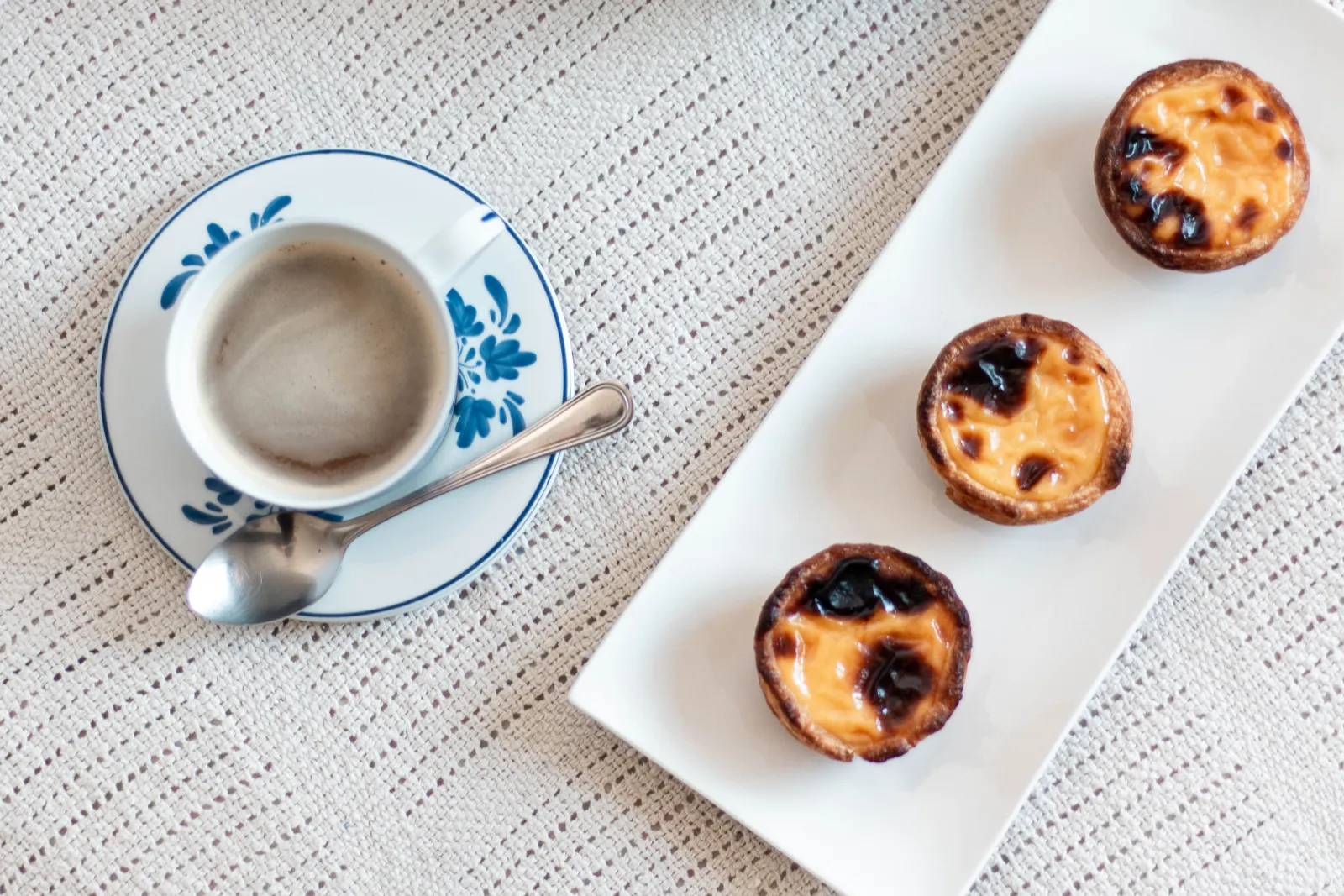
The pastry case, beyond the custard tart
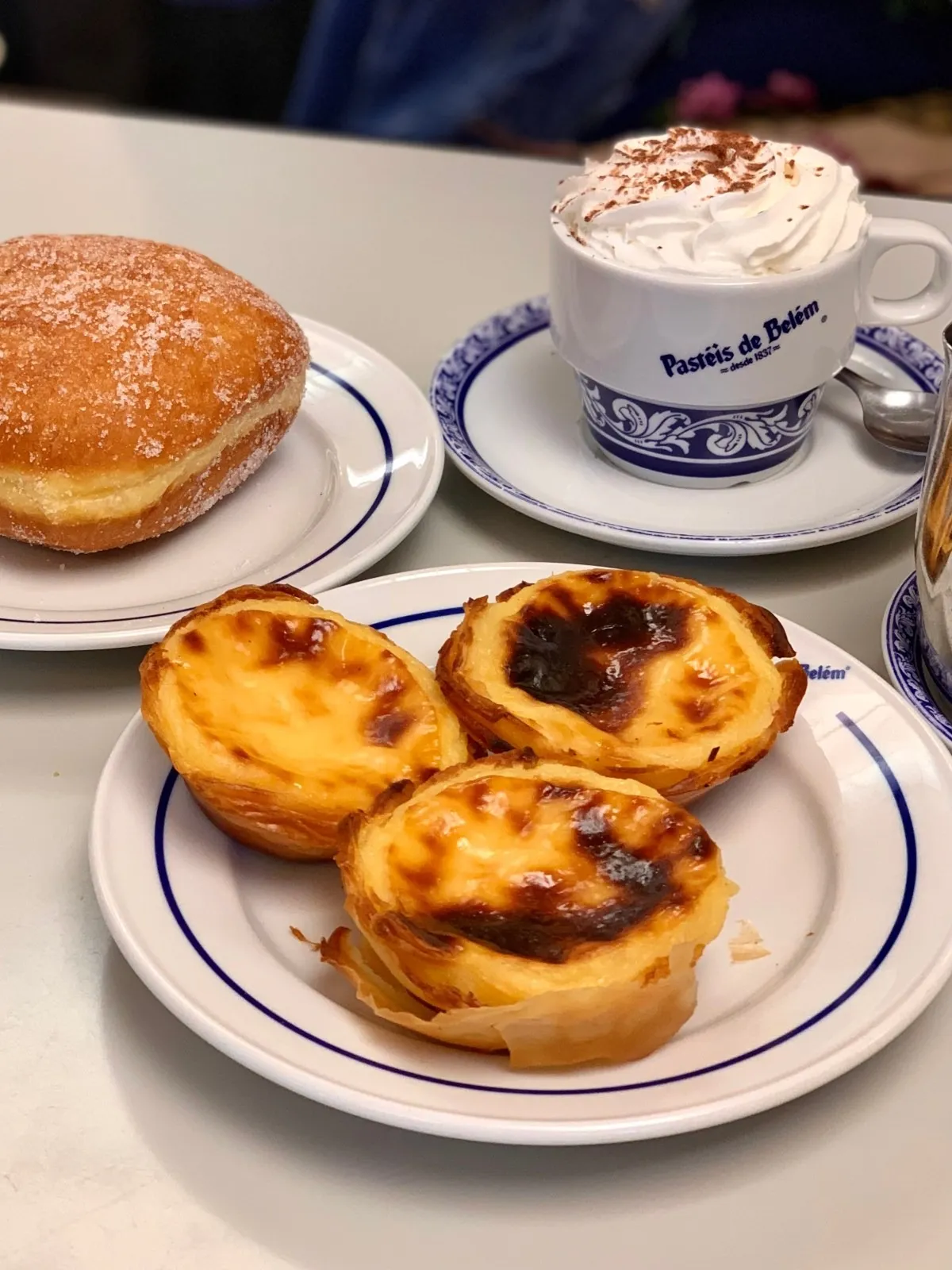
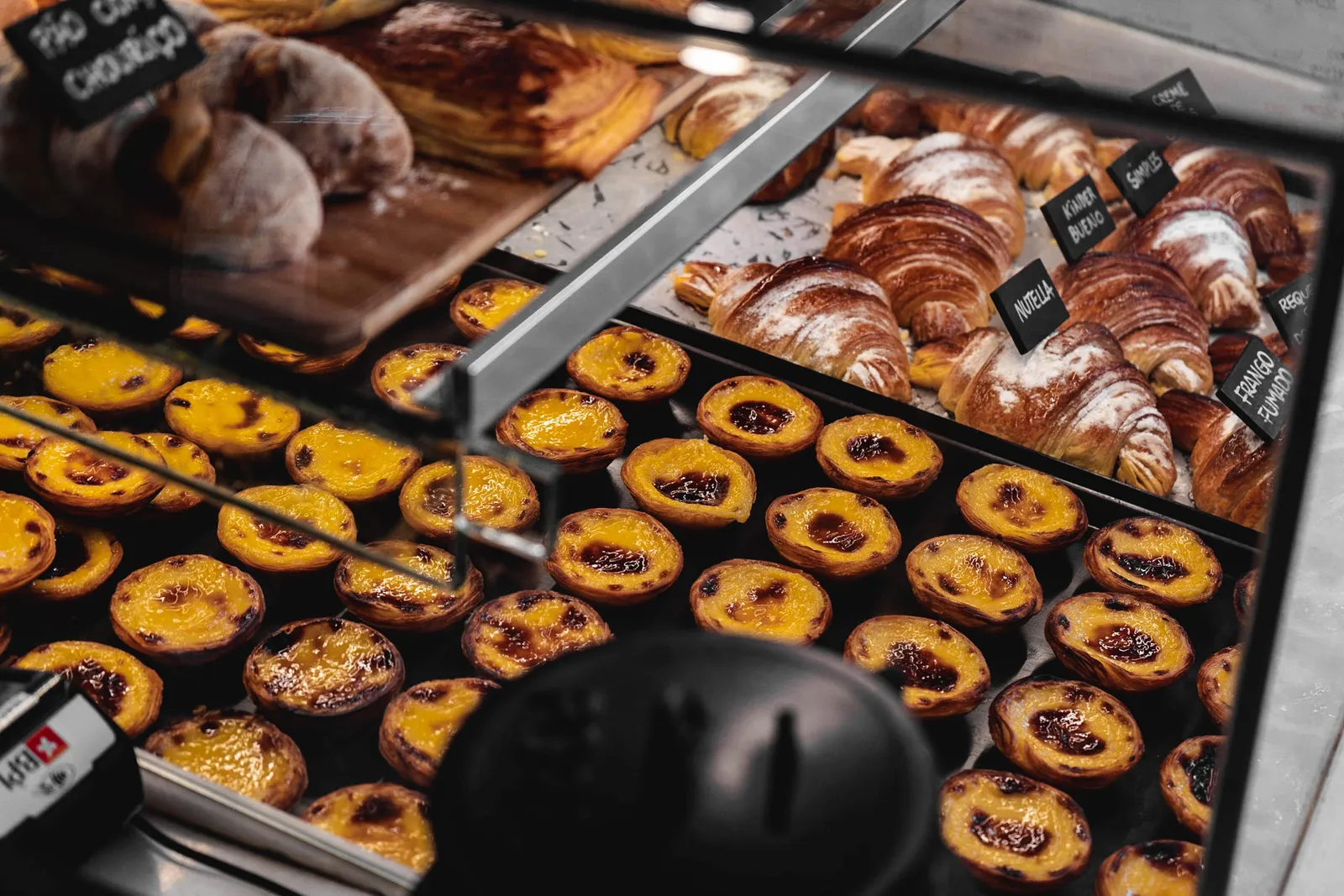
The pastel de nata deserves its reputation, and it is not the only thing in the case. Our guide to the custard tarts of Lisbon covers that one properly, so here are the others worth knowing.
Bola de Berlim is a sugared doughnut, usually split and filled with a thick egg cream. It is also, gloriously, sold on beaches in summer by people walking the sand with a cool box.
Pao de Deus is a soft, slightly sweet roll with a coconut topping baked onto the crust.
Queijada is a small cheese tart, and the recipe changes noticeably from region to region.
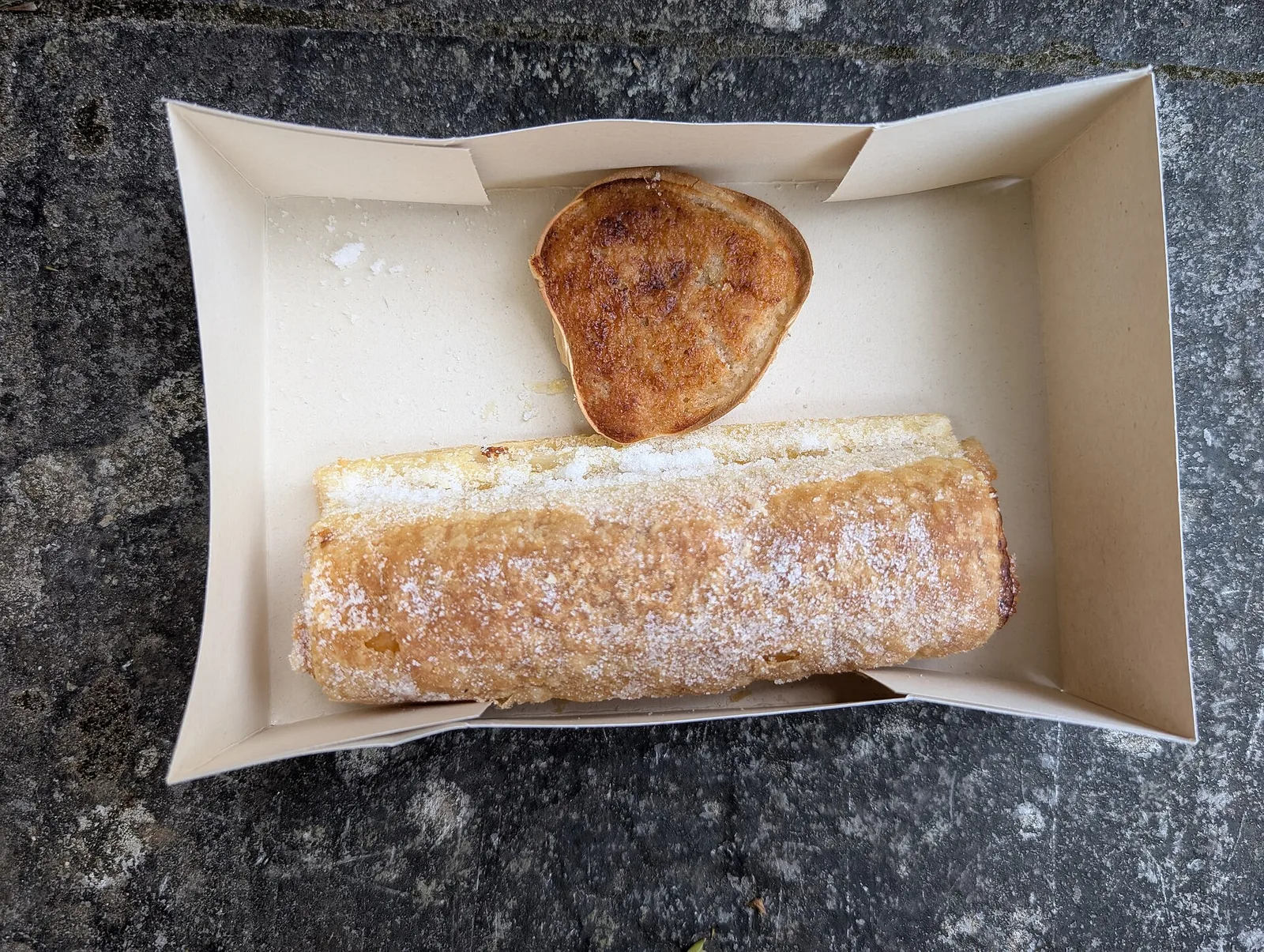
Travesseiro is a long puff pastry pillow with an almond and egg filling, most associated with Sintra.
And the whole family of egg and sugar pastries that Portuguese convents produced for centuries, which is why so many of them are yellow, dense and named after something religious.
Pointing is a perfectly respectable ordering strategy. Say a number, point at the tray, and nobody will think less of you.
Standing, sitting, or sitting outside
There are three prices hiding in a lot of cafes, and knowing that saves both money and irritation.
At the counter you pay the everyday local price, and service is immediate.
At an indoor table you may pay a little more, and someone will usually come to you.
On a terrace on a famous square you pay for the square. This is not a trick and it is not illegal. It is the same logic as anywhere in Europe, and it is worth knowing before you sit down expecting counter prices.
🔑 The practical version: drink your morning coffee at the counter with everyone else, and save the terrace for the one afternoon when the point is the view and not the drink.
Want someone to translate the counter for you?A morning food walk covers the coffee words and the good pastry casesPaying, tipping and what happens if nobody comes
At the counter you usually pay at the end, at the till, and often to a different person than the one who served you. In smaller places somebody simply remembers what you had. Say what you ate, and it will be right.
At a table, ask for the bill with a raised hand and a quiet request. Nobody will bring it unprompted, because bringing it unprompted would be rude.
Tipping is light here. Rounding up, or leaving small change on the counter, is normal and entirely sufficient. There is no expectation of a percentage on a coffee and a pastry.
⚠️ One thing that catches people out at lunchtime: anything that appears on your table uninvited, bread, olives, a small dish of cheese, is chargeable. It is called the couvert, it is completely above board, and you are free to send it back untouched if you do not want it.
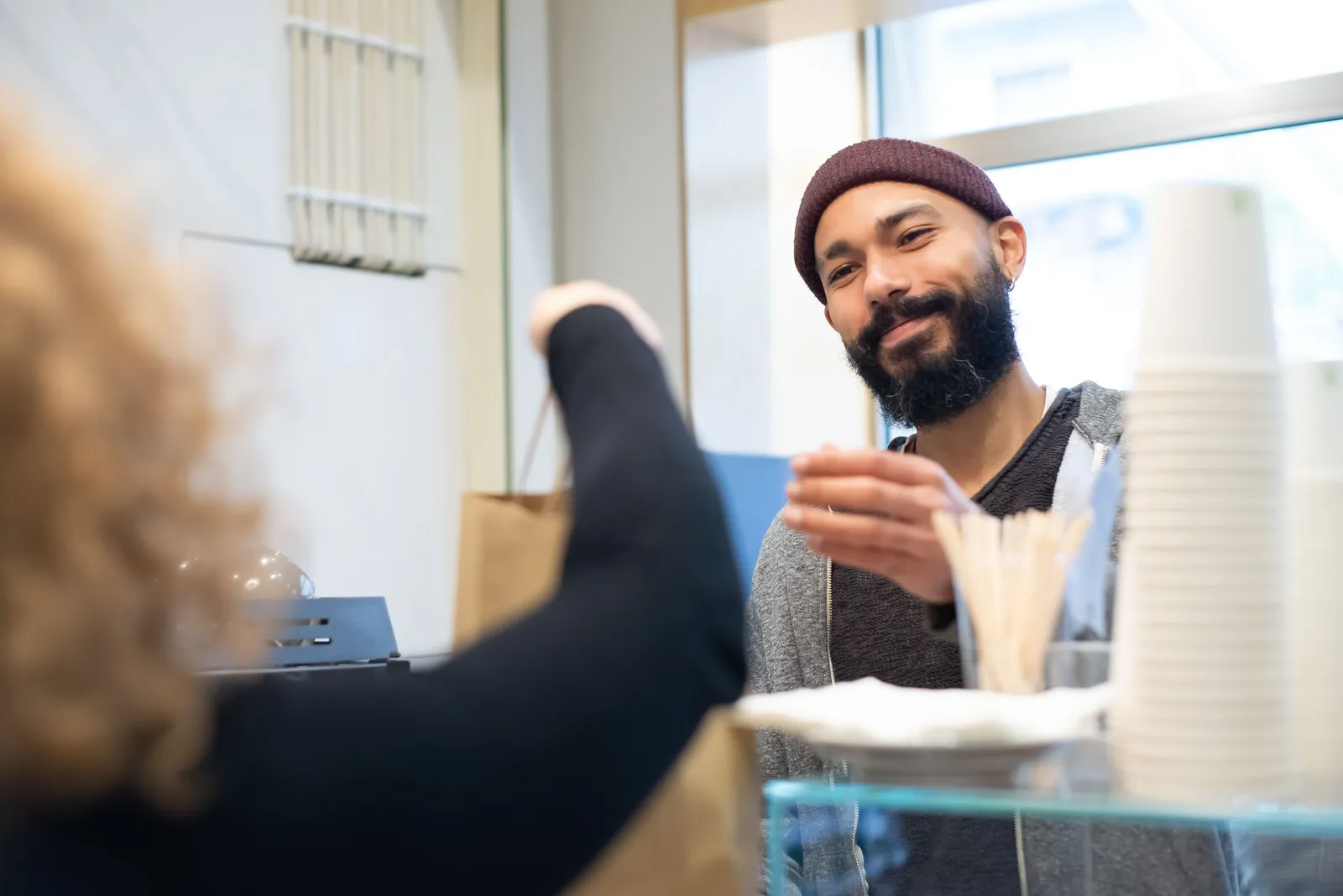
Lunch at the same counter, which visitors keep missing
Around midday many pastelarias switch modes and put out a dish of the day. It is written on a board or a slip of paper, it changes daily, and it usually bundles soup, a main course and a drink at a fixed price that is very hard to beat anywhere else in town.
This is proper home style cooking, served fast to people who have forty minutes. It is also the single best value meal available to a visitor in Portugal, and most visitors walk straight past it on their way to a restaurant with a menu in four languages.
For the wider picture of what to order across the country, our food and wine guide covers the dishes and the regions, and for what a Portuguese morning actually looks like beyond the pastry case, see our Portuguese breakfast guide.
In one line: stand at the counter, learn five coffee words, point at whatever looks good, and come back at midday for the dish of the day.