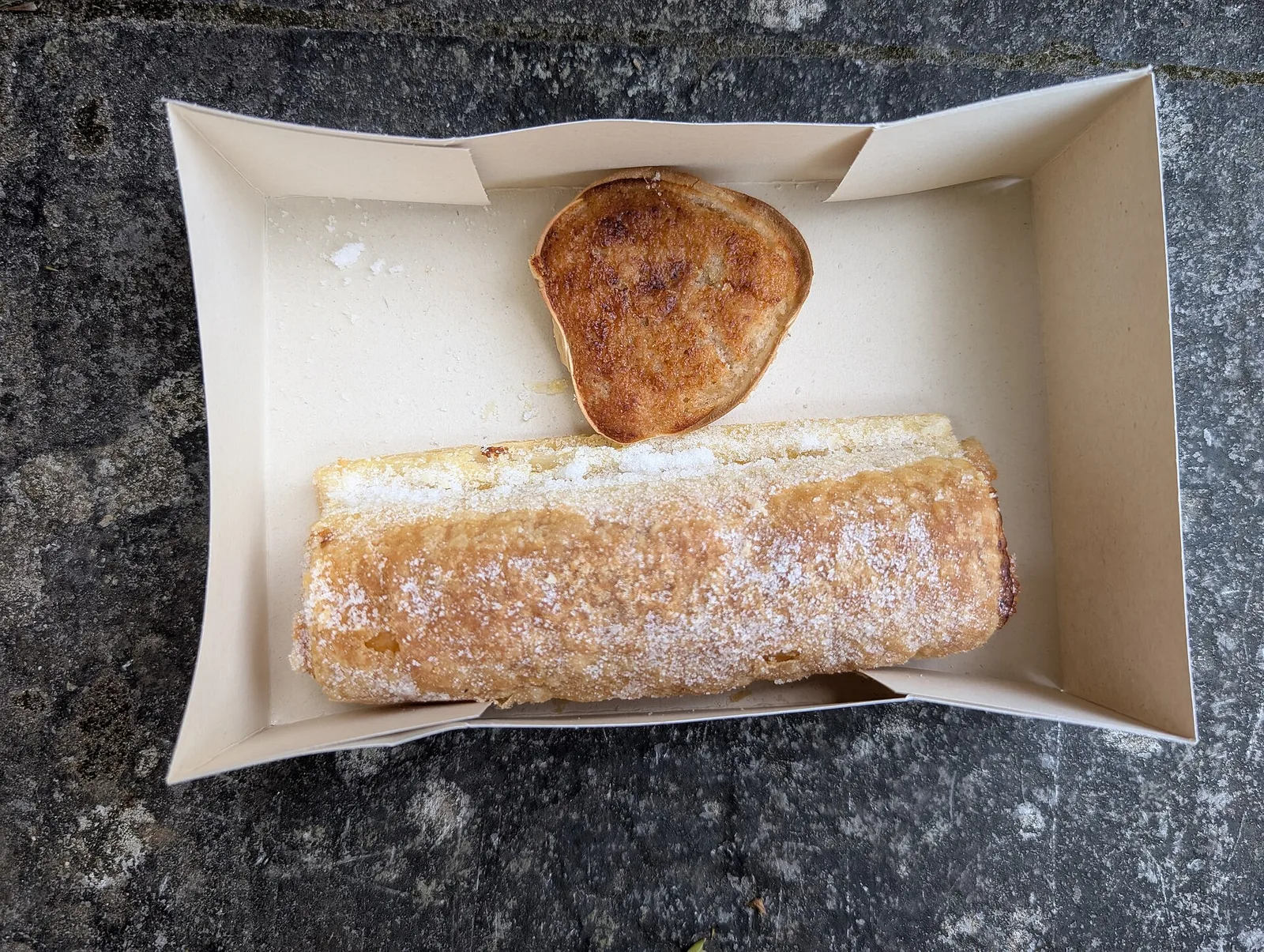
Breakfast in Portugal takes about four minutes and costs almost nothing. There is no cooked plate, no long sit-down, and very little negotiation: you go to the pastry shop on the corner, you order a coffee and something sweet, you eat it standing at the counter, and you leave. It is one of the most pleasant small habits in the country and it is the thing visitors most reliably miss, because they paid for a hotel buffet instead.
The shape of the morning
A coffee, small and strong by default, or a milky version in a glass.
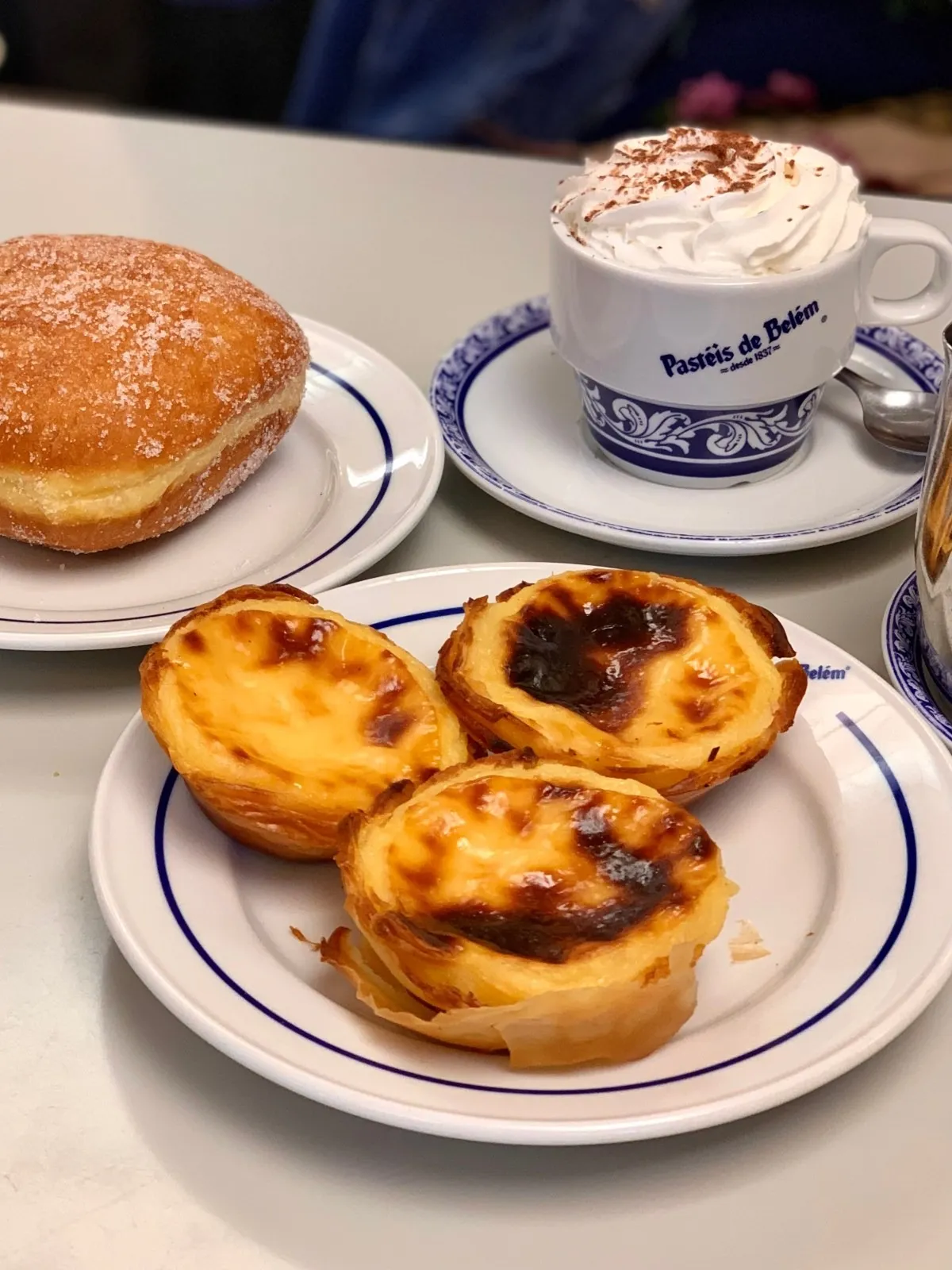
Something sweet, from a counter of pastries that changes by region and by day.
Standing at the bar, which is cheaper and faster and where everybody else is.
Four minutes, then out.
It costs very little, which is why people do it twice.
The coffee vocabulary
You do not need much, and a little goes a long way.
The default is a small strong espresso, which is what arrives if you simply ask for a coffee. It is the national drink and it is drunk all day.
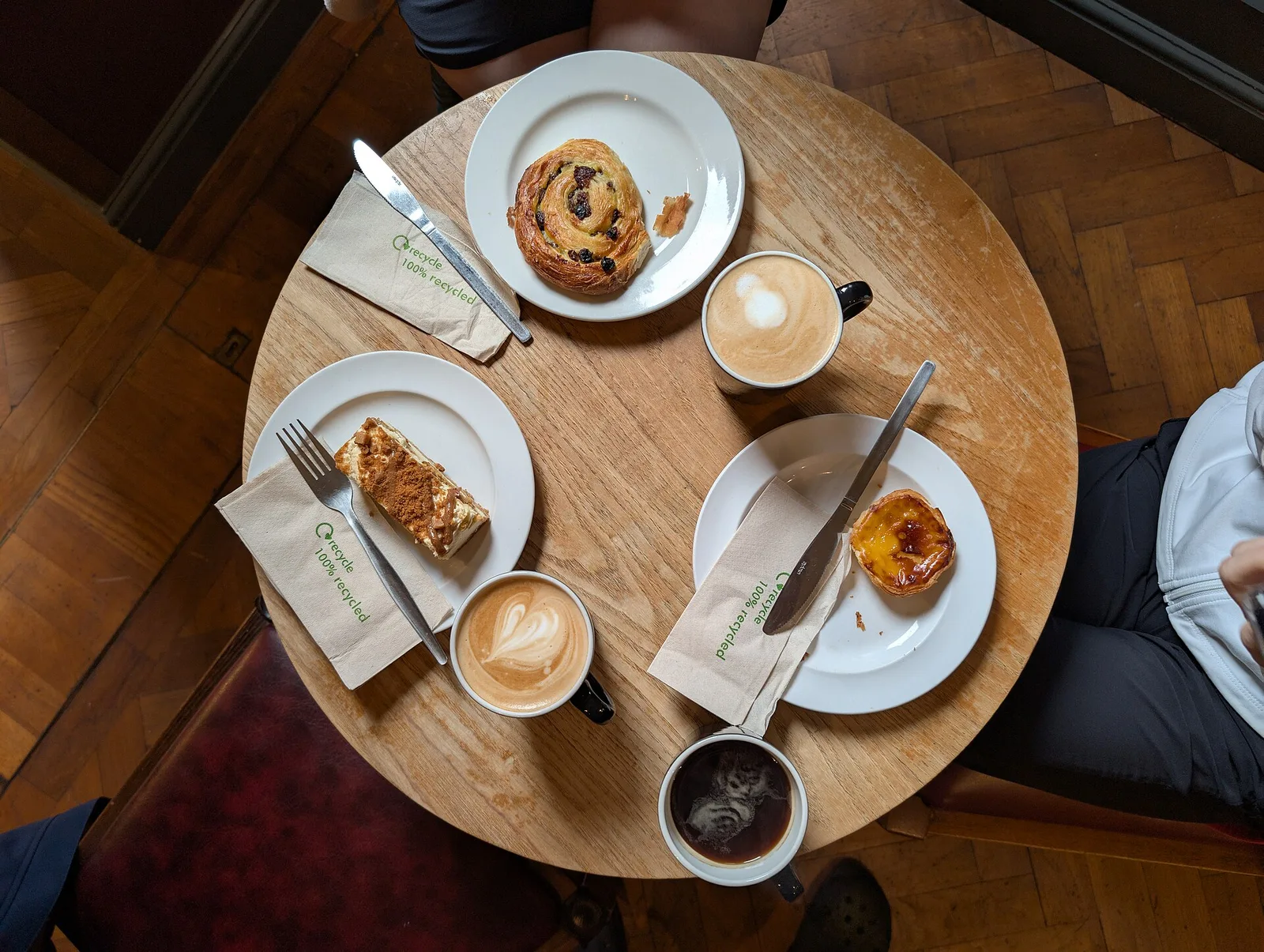
A milky coffee in a tall glass is the other common morning order and is what most visitors actually want.
A smaller milky version in a cup exists too, and the names shift between the north and the south of the country for the same drinks.
Decaf and larger sizes exist and are ordered less often.
Pointing works. Nobody minds, and looking at what the person beside you is drinking is a perfectly good ordering strategy.
The pastry counter
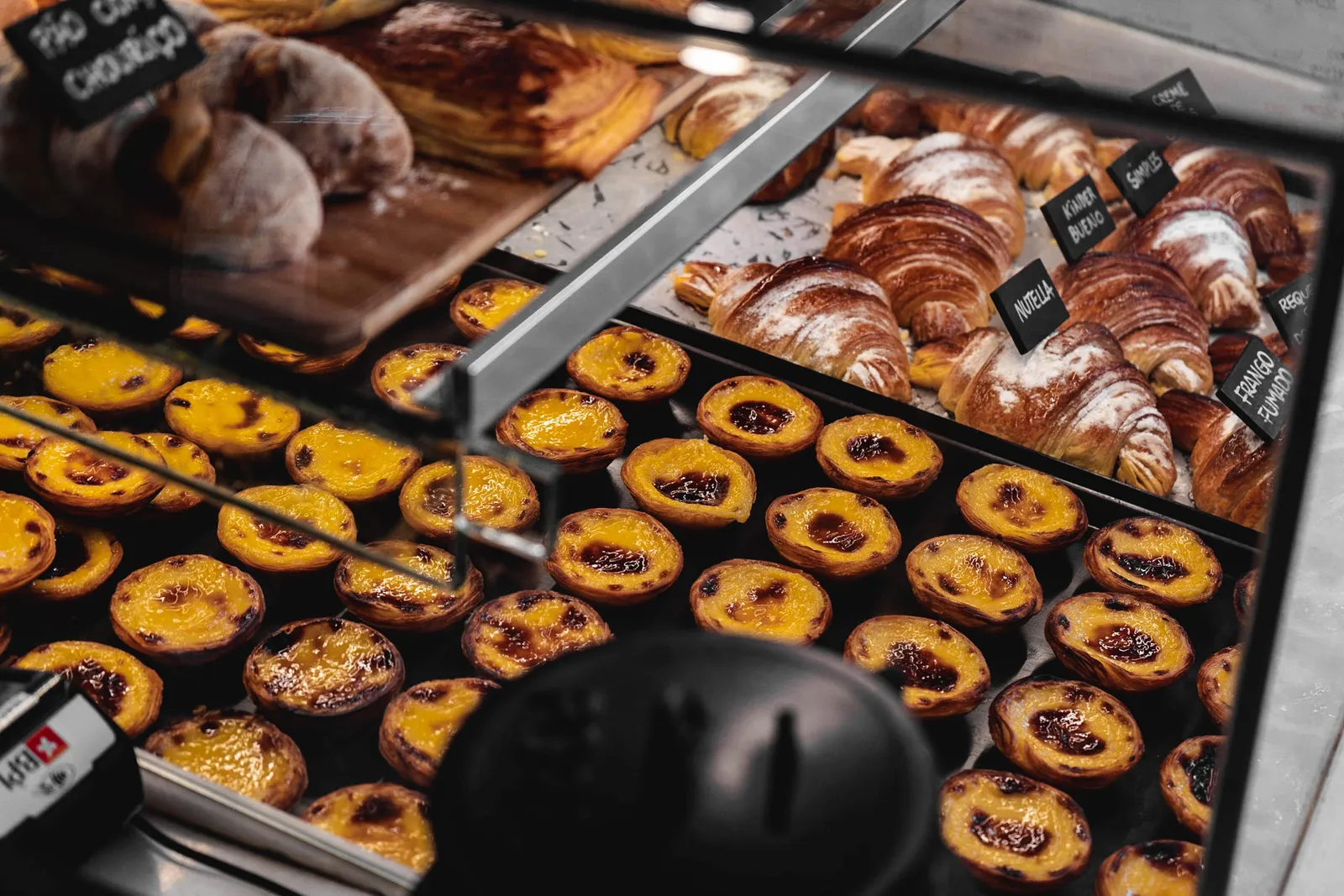
Custard tarts are the famous export and are on every counter in the country, warm if you are lucky and dusted with cinnamon at the table.
Regional pastries are the real discovery. Almost every town has one or two that never travel, made with eggs, almonds, or the local cheese, and asking what is made here is the single best question in any pastelaria.
Savoury options matter too: a toasted ham and cheese sandwich pressed flat is the standard salty breakfast, and there are pies and croquettes on the same counter.
Bread and butter. Toast made from a dense local loaf, heavily buttered, is a common and underrated order.
Everything is inexpensive, and two pastries and a coffee is still a cheap breakfast.
Why to skip the hotel
It costs several times more than the same morning outside.
It is aimed at an international audience, with cold cuts, cereal and eggs rather than anything Portuguese.
There is a pastelaria within two minutes of essentially any accommodation in any Portuguese town.
Book room-only when comparing rates and assume you are eating out, which is nearly always the better trip as well as the cheaper one.
Practical notes
Pastelarias open early, from around seven, and are busiest between eight and ten.
Many serve a cheap set lunch too, which is worth remembering later in the day.
Cards are widely accepted and small counters may still prefer cash for a single coffee.
Portuguese breakfast is small, so if you need a substantial start, plan a second stop rather than expecting one plate to do it.
Sunday mornings are slower and busier, which is a pleasure rather than a problem.
Where this fits
For the country’s food as a whole, from the seafood to the wine and the eating hours that catch visitors out, our guide to Portuguese food and wine covers the table.
For the famous pastry specifically, and the difference between the original and every other version, our guide to the custard tarts of Belém is the deep dive.
And for the other end of the day, our guide to the best restaurants in Lisbon covers where to eat properly once you have finished standing at counters.
The short version
Book your room without breakfast and go to the pastry shop on the corner instead. Order a small strong coffee or a milky one in a glass, take whatever is made locally rather than the pastry you already know, and eat it standing at the counter, which is both cheaper and the local habit. Expect it to take four minutes and cost very little. And ask in each new town what they make here, because half the good pastries in Portugal never leave the place they come from.
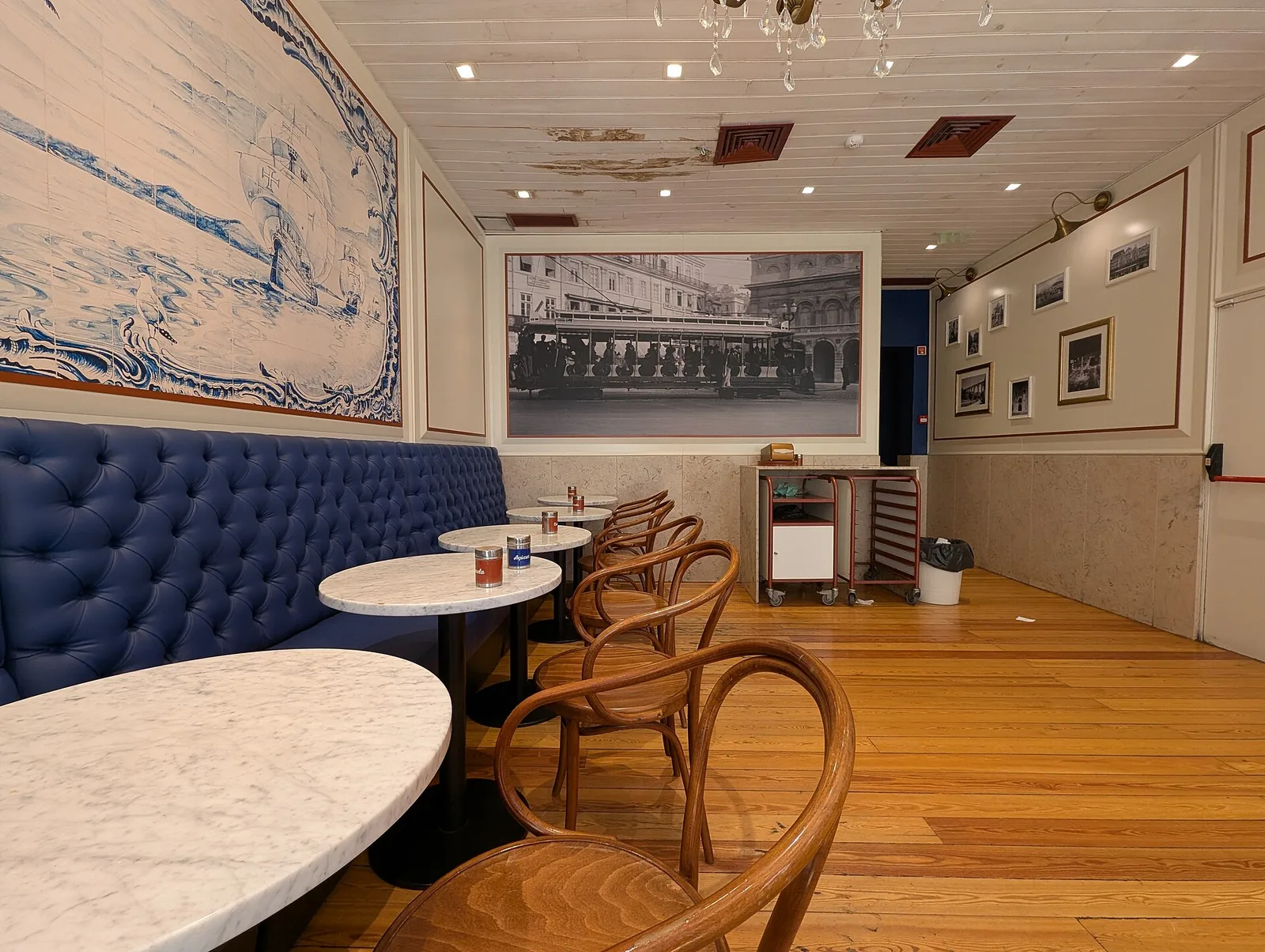
The counter itself runs on a set of rules nobody explains, from which coffee word to use to why the terrace costs more than the marble bar two metres away. If you would rather not guess your way through the first few mornings, start with our guide to ordering in a Portuguese pastelaria.