Sintra is a hill of palaces, gardens and mist half an hour from Lisbon, and it is the most oversubscribed attraction in Portugal. The journey is easy. Everything after the journey is where people lose the day: the queues, the hill transport, the walking between sites, and above all the attempt to see four things in six hours. Here is how to have the good version.
What Sintra is
A wooded hill west of Lisbon where Portuguese royalty and wealthy eccentrics built summer palaces across several centuries, producing an unusually dense collection of very different buildings in a small area of forest.
The sites are spread out. They are not in a town centre; they are scattered across the hill, connected by narrow roads and steep paths.
The town at the bottom is small, pretty and completely overwhelmed on a summer day.
The microclimate is real. Sintra is cooler, wetter and mistier than Lisbon, which is why the palaces are there and why you should bring a layer even in August.
The two-site rule
This is the whole article in one paragraph, and it is the difference between a wonderful day and an exhausting one.
Each site takes longer than it looks. Getting between them takes longer than it looks. The queues take longer than they look. Two sites is a full, comfortable day. Three is a rush. Four is a day of transport and lines.
Pick two, buy the tickets, and treat everything else as a bonus if the day runs well.
Which two
The choice depends on what you actually want from the hill.
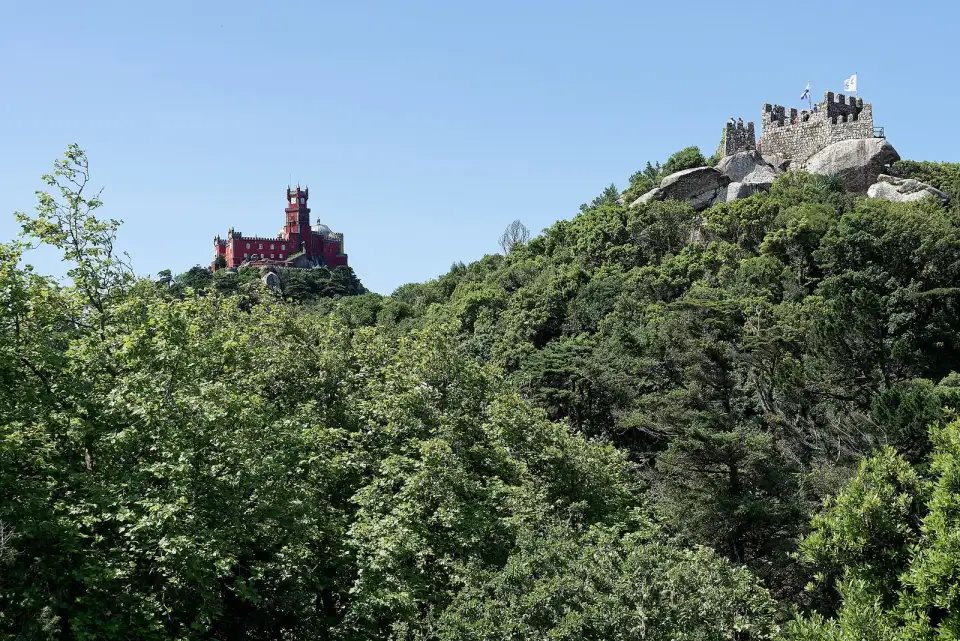
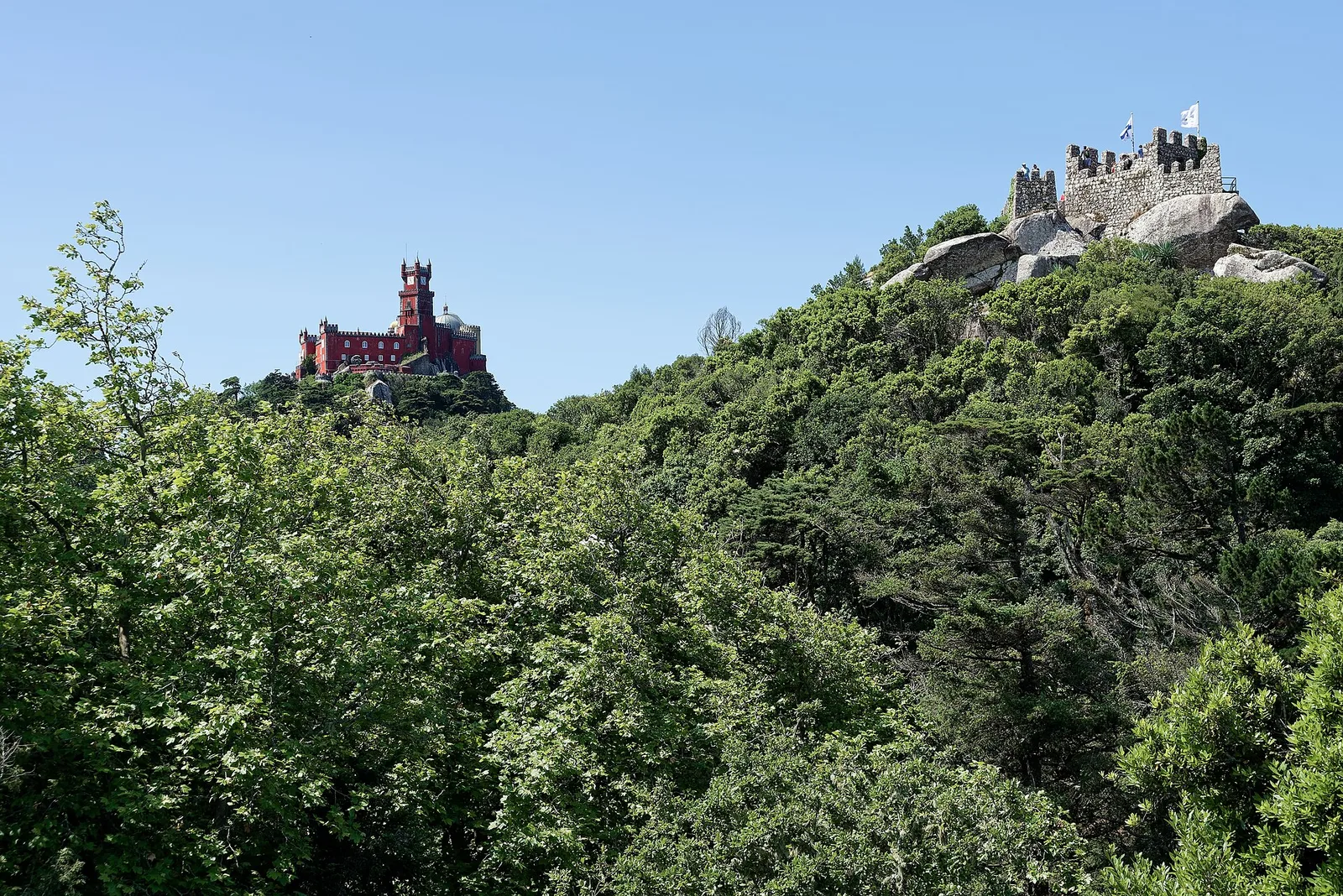
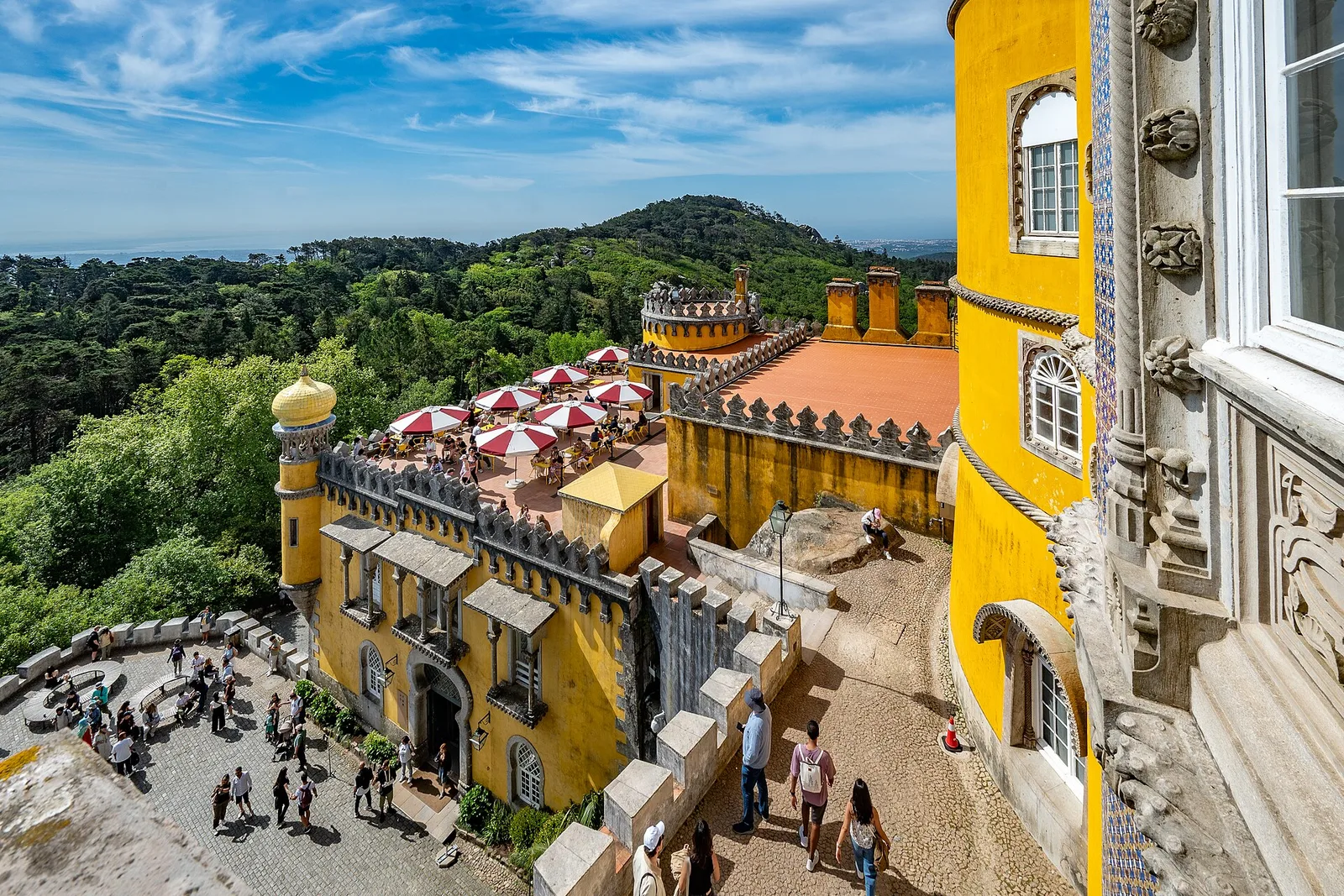
The famous colourful palace on the summit is the image of Sintra, extravagant and romantic, with gardens and views. It is also the busiest and the one with timed entry. If you only do one, this is usually it.
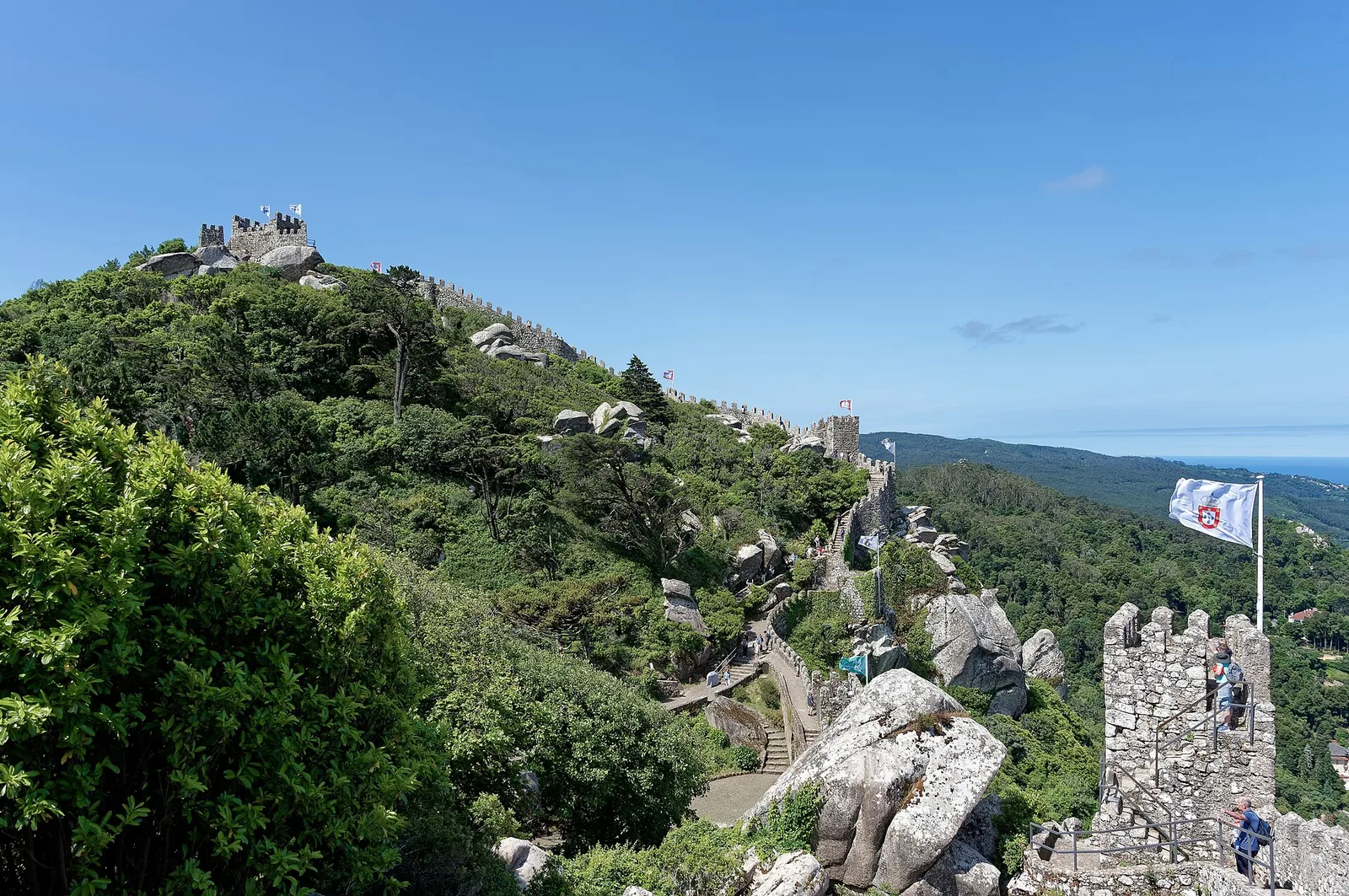
The Moorish castle walls along the ridge are the opposite: ancient, austere, mostly outdoors, and a walk along battlements with enormous views. It pairs well with the palace above it because both are on the same hilltop.
The estate with the initiation well in the town is a gothic-romantic garden of grottoes, tunnels and follies, and it is the favourite of a great many visitors. It is walkable from the station, which is a real advantage.
The palace in the town centre with the twin conical chimneys is the oldest and the easiest, right by the station, and it is a good second site precisely because it costs no transport.
Getting there and getting around the hill
The train from central Lisbon is frequent, cheap on an ordinary transport card and takes well under an hour. This is the right way to arrive.
The hill bus loops up from the station past the main sites. It is the standard solution and it queues at peak times.
Taxis and tuk-tuks wait at the station and are the faster, more expensive way up.
Walking up is possible through the woods and is a real climb that will cost you a chunk of the day.
The sensible pattern is transport up and walking down, which gives you the woodland paths without the ascent.
Do not drive. Parking is scarce, the roads are narrow and winding, and the tour coaches use the same tarmac.
Practical notes
Book timed entry for the busiest palace as soon as your date is fixed, and check each site’s arrangements separately because they differ.
Bring a layer. The hill is genuinely cooler and mistier than the coast, and the mist is part of the atmosphere rather than a disappointment.
Wear real shoes. The gardens are steep, the paths are uneven and the castle walls are a scramble in places.
Eat in the town rather than at the sites, and try the local pastries, which are a Sintra speciality in their own right and quite different from Lisbon’s.
Leave when you are done. The last part of the afternoon is the busiest on the buses back down, and the train home fills.
Fitting it into a Lisbon trip
Sintra is a full day and should be treated as one rather than as a morning with something else attached.
It is also the day that most rewards being early, which makes it a poor choice for the morning after a late night out in Bairro Alto. Leave that for a day with nothing booked.
The other classic Lisbon sight has the same early-or-nothing rule for the same reason: our guide to tram 28 covers why the hour you board decides whether it is charming or a crush.
For the city itself and how the day trips fit around it, our Lisbon guide covers what is worth your time in town. And since Sintra is reached from central stations, where you sleep affects how early you can realistically leave; our guide to where to stay in Lisbon covers the districts and their connections.
The short version
Take the earliest train from Lisbon, book timed entry for the busiest palace before you go, and choose exactly two sites rather than four. Use the hill bus or a taxi up and walk down through the woods. Bring a layer for the mist and shoes for the steps, eat in the town, and do not drive. Sintra done this way is one of the best days in Portugal, and done the other way it is a queue with a view.