The pastel de nata is a small tart of custard in blistered puff pastry, it costs about the same as a coffee, and it is the single most effective piece of national branding Portugal has. It is also the subject of a genuine and unresolved argument in Lisbon about where the best one is. Here is the pastry, the famous queue, whether to join it, and how to eat these properly.
What it is
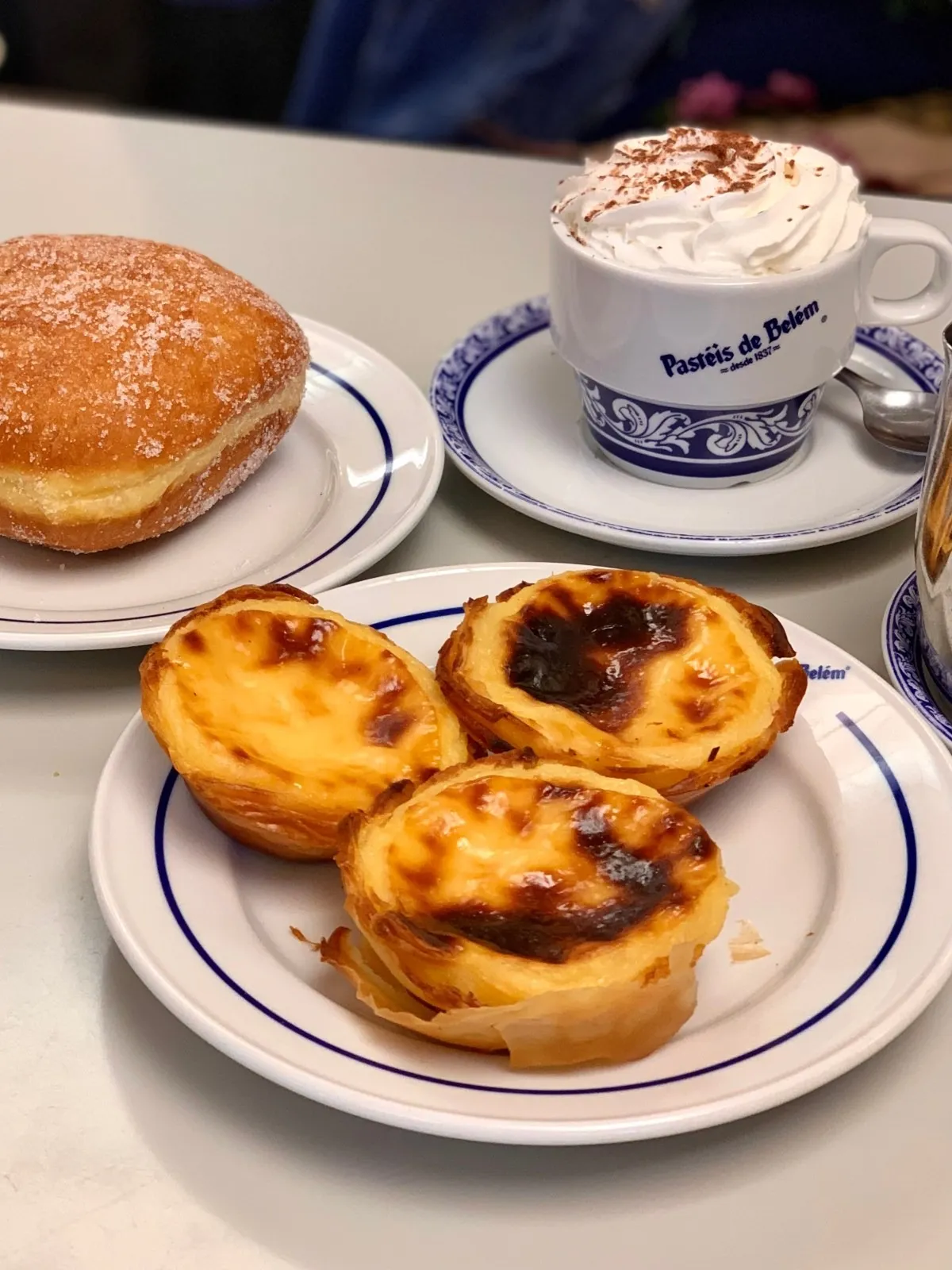
Custard in flaky pastry, baked in a very hot oven so the surface catches and blisters into dark spots, which are a feature rather than a fault.
The origin is monastic. Convent kitchens used egg whites in quantity, for laundry starch among other things, which left a great many yolks and a need to do something with them. The result was a tradition of egg-heavy Portuguese pastries of which this is the famous survivor.
It is eaten warm, ideally within an hour of coming out of the oven, standing at a counter with an espresso.
Cinnamon and icing sugar sit on the counter and are added by you, to taste, rather than baked in.
The famous one in Belem
The original recipe passed from a monastery to a bakery next door in the nineteenth century, and that bakery still holds it.
The name is protected. Only that shop sells the pastel de Belem; everywhere else sells pastel de nata, which is the same idea and a different pastry.
The recipe is genuinely secret, prepared by a small number of people in a separate room, which sounds like marketing and appears to be true.
The tart is different. The custard is less uniform and the case is flakier and more layered than the standard version, and whether that makes it better is exactly the argument.
The queue is real and moves faster than it looks. There are normally two lines, one for takeaway and one for the large warren of tiled rooms inside, and they move at different rates.
The contenders
Lisbon takes this seriously and every resident has an opinion delivered instantly.
Neighbourhood pastelarias across the city bake their own, several with serious reputations, and the best of them are as good as the famous one and involve no queue whatsoever.
The freshness rule matters more than the address. A tart from a busy bakery in the hour after baking beats a famous tart that has been sitting.
Ask anyone. Asking a Lisbon local where the best pastel de nata is produces an immediate, confident and non-negotiable answer, and following it is both effective and a small pleasure in itself.
Warm from the oven is the whole thing. Some bakeries call out when a tray comes out and the counter fills.
How to eat them properly
Standing at the counter, not at a terrace table, which costs more for the same tart.
With an espresso, which is how the pairing is meant to work and cuts the sweetness.
Warm, which is worth waiting for.
Cinnamon yes, sugar optional, added at the counter.
Two, because one is a decision you will immediately revisit.
Where it fits in the day
This is a mid-morning or mid-afternoon habit rather than a dessert, and Lisbon treats it that way.
The natural pairing is with the walking, since the city’s hills earn you the calories, and with the coffee culture, which is a standing, thirty-second affair at a counter rather than a sit-down.
For the wider picture of how Lisbon eats, from tascas to grilled fish to the couvert that catches visitors out, our shortlist of where to eat in Lisbon covers the meals around it.
For the national context, including the other convent pastries that came out of the same egg-yolk problem, our guide to Portuguese food and wine fills it in.
And for the evening that goes best after a day of walking and eating, our guide to finding real fado in Lisbon covers the other thing this city does better than anywhere.
The short version
The pastel de nata is custard in blistered puff pastry, eaten warm at a counter with an espresso, with cinnamon added by you. The famous Belem version is genuinely different and genuinely good, and the right way to have it is as the end of a Belem morning spent on the monastery and the tower rather than as a special journey. Elsewhere in the city, any busy bakery baking its own is worth trying, freshness beats fame, and every local you ask will tell you exactly where to go.