Portugal is one of the safest, easiest countries in Europe to travel, which is exactly why insurance is the part of the trip most people skip. Then a phone vanishes on tram 28, a surfboard meets a shoulder at Ericeira, or a strike scrambles a connection, and the cheapest line in the budget suddenly matters most. Here is what travel insurance actually needs to do for a Portugal trip, and how to buy it without overpaying.
Medical cover: public care is good, private bills are real
Portugal’s public health system is solid, and EU and UK residents with an EHIC or GHIC card can use it on the same terms as locals. But as a visitor you will often end up at a private clinic or hospital, because they are faster, more likely to have English-speaking staff, and simply what your hotel will point you to. Private care is billed at private rates: a straightforward consultation can run 50 to 150 euros, a night in a private hospital several hundred, and serious treatment plus a medical repatriation flight home can climb into five figures.
That is the core job of the policy. Look for medical cover of at least 1 million euros (most decent policies offer far more), emergency dental, and repatriation included as standard. If you take regular medication or have a pre-existing condition, declare it when you buy; an undeclared condition is the most common reason claims get refused.
Theft: the number one claim in Lisbon and Porto
Violent crime in Portugal is rare, but pickpocketing is a genuine industry in the tourist cores of Lisbon and Porto: tram 28, the Baixa, busy miradouros, the Ribeira, crowded metro cars to and from the airport. Phones and wallets are the usual haul, which makes theft cover the most commonly used part of a Portugal policy.
To actually get paid, the process matters more than the policy brand:
- Report the theft to the police within 24 hours and get the written report (the tourist police stations in central Lisbon and Porto handle this routinely, in English).
- Check the single-item limit before you travel. Many policies cap any one item at 200 to 500 euros, which does not cover a flagship phone; add gadget cover if yours is worth more.
- Keep proof of ownership, such as receipts or photos of the item and its box.
- Know the exclusions: valuables left in a parked car, on a beach towel or in checked luggage are usually not covered.
Surf, watersports and hiking: read the activity list
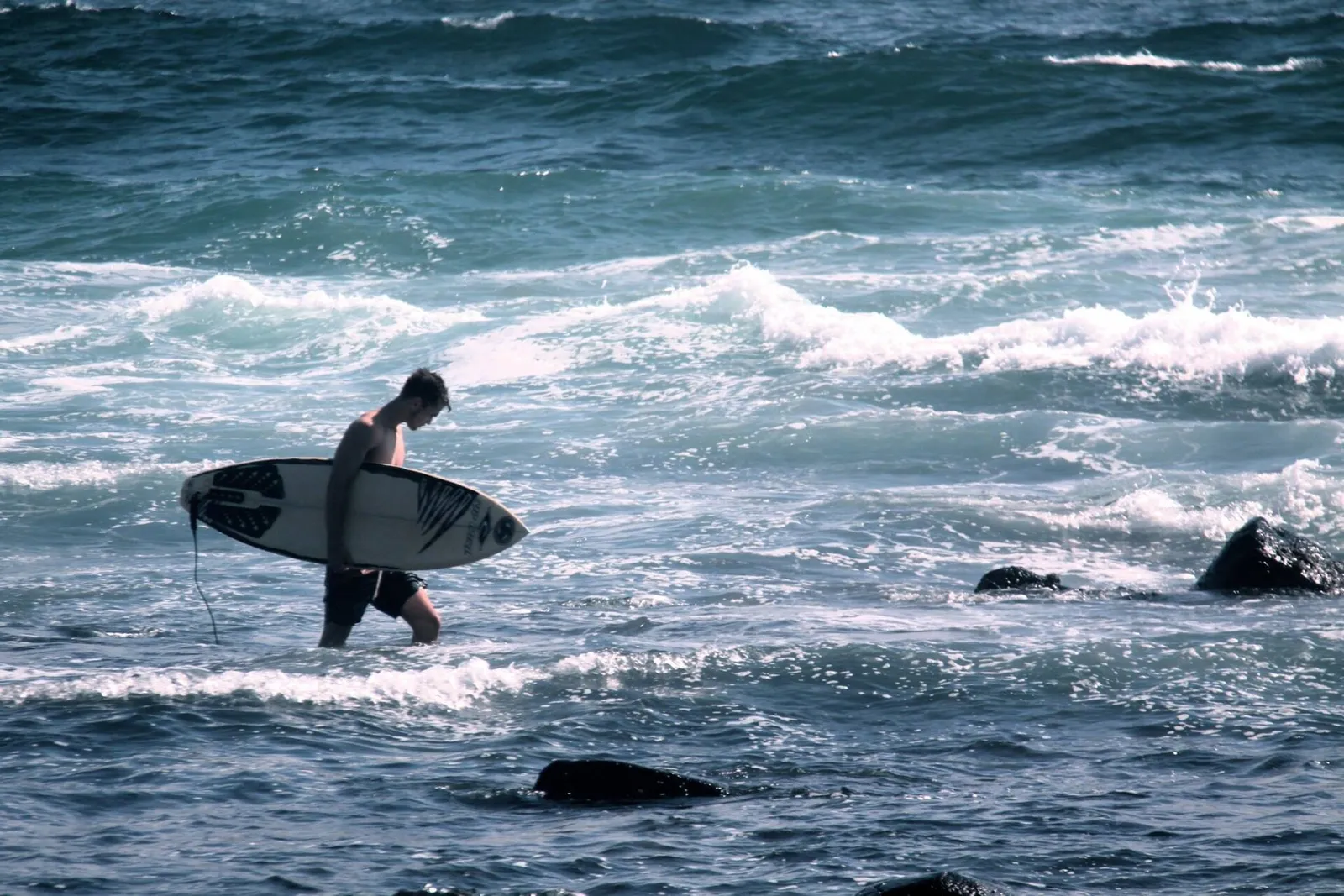
Portugal is a place where trips turn active without much planning: a surf lesson in Ericeira or Peniche, a guided kayak tour to the Benagil cave, coasteering in the Algarve, a long day on the Rota Vicentina trails. Insurers differ widely here. Some include recreational surfing and bodyboarding as standard; others file them under adventure sports and pay nothing without an add-on.
Before you buy, check the policy’s activity list for everything you might plausibly do: surfing (and whether lessons or independent surfing are treated differently), kayaking, stand-up paddle, diving (usually capped at a depth), quad biking and hiking above certain altitudes. The add-on typically costs a few euros and turns a refused claim into a paid one.
Flight disruption and cancellation
Strikes, storms and tight connections happen, and Lisbon airport in high summer is not famous for slack in the system. Two layers protect you. First, EU air passenger rights: for flights departing the EU, or arriving on an EU carrier, long delays and cancellations can entitle you to care and sometimes cash compensation directly from the airline, no insurance needed. Second, your policy’s travel disruption cover picks up what the airline does not: extra nights and meals when you are stranded, missed connections on separate tickets, and cancellation cover if illness or emergency stops the trip before it starts.
Cancellation cover only protects costs booked before things go wrong, so buy the policy when you book the trip, not the week you fly. Make sure the cancellation limit actually matches what you have spent on flights and hotels.
Buy cover when you book, not when you flyCancellation protection only works if the policy exists before the problem doesRental cars: the excess is the trap
If your plan includes driving, and for the Algarve or the Douro it probably should (see our car rental guide), know that the rental desk’s basic cover leaves you exposed to an excess of 1,000 to 2,000 euros for damage or theft. You can pay the desk daily for full cover, which adds up fast, or handle it more cheaply through car hire excess insurance, either as part of your travel policy or as a standalone add-on. Check whether tyres, glass and the undercarriage are included, because gravel viewpoint car parks are exactly where rental cars get scratched.

What good cover for Portugal looks like
| Cover | What to look for | Why it matters in Portugal |
|---|---|---|
| Medical + repatriation | 1 million euros or more, dental included | Private clinics bill at private rates; a medical flight home is the big-ticket risk |
| Theft and baggage | Single-item limit that matches your phone | Pickpocketing in central Lisbon and Porto is the most common claim |
| Activities | Surfing, kayaking, SUP, hiking listed | Watersports are often an add-on, not standard |
| Disruption | Delay benefit plus stranded-costs cover | Strikes and summer congestion at Lisbon airport |
| Cancellation | Limit at least equal to prepaid costs | Only works if bought when you book |
| Car excess | 1,000 to 2,000 euros excess covered | Far cheaper than the rental desk’s daily full cover |
Choosing a provider without overthinking it
The international market is competitive and no single company wins for everyone. SafetyWing is popular with long-stay travelers and digital nomads for its subscription model; World Nomads is known for broad adventure-activity lists; Allianz and IMG offer classic single-trip and annual policies with high medical limits. Any of them, and plenty of strong national insurers in your home country, can cover a Portugal trip well. Compare on the things that matter here: the medical limit, the theft single-item cap, the activity list, the excess you pay per claim, and real reviews of how claims are handled.
The short version
For a typical week in Portugal, you want: at least 1 million euros of medical cover with repatriation, theft cover with a realistic single-item limit, your actual activities (surfing included) on the list, disruption and cancellation cover bought at booking time, and the rental car excess handled if you drive. That whole package usually costs less than a seafood dinner in Cascais. Sort it early, file it away, and get back to the fun parts of planning with our Portugal for beginners guide and the best time to visit.
Save the local numbers next to your insurer’s assistance line rather than instead of it, because the two do different jobs: one gets help moving, the other decides where you are treated and who pays. Our guide to emergency numbers in Portugal covers the first half.
One more thing belongs in the same half hour, especially if a hire car is on the list: how you are getting from the airport to your first bed. Our guide to Lisbon airport transfers covers the options and the point at which collecting a car at the terminal stops making sense.