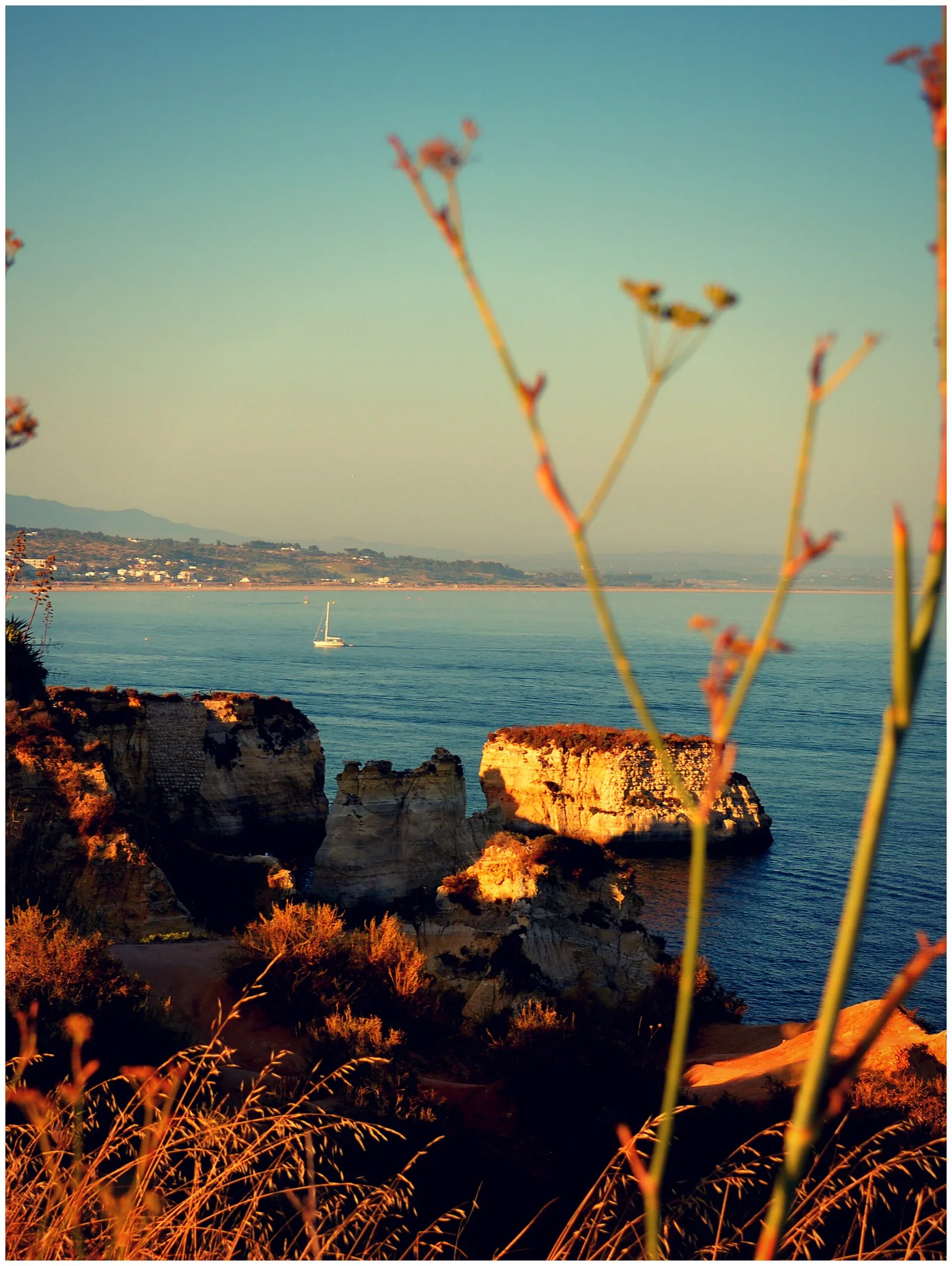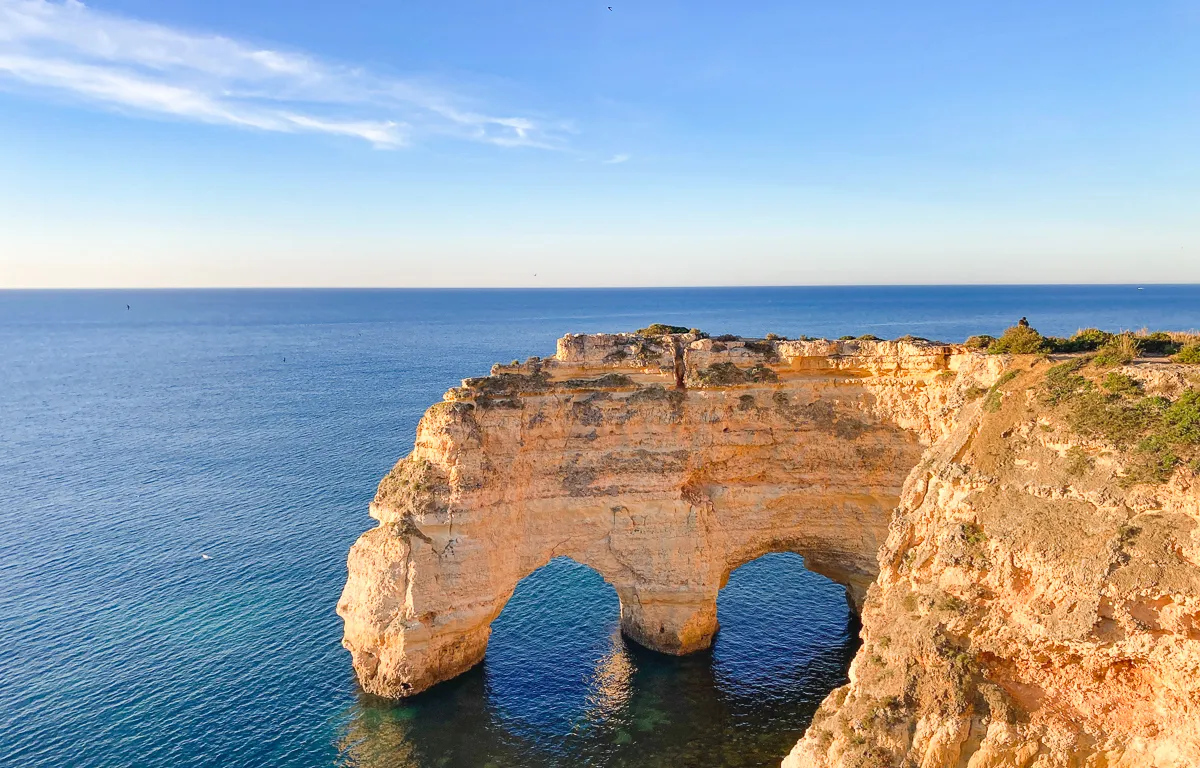
The Algarve is Portugal’s holiday coast, and for once the hype is earned. Along its 150-odd kilometres of southern shore you get honey-coloured cliffs, hidden coves reached only by boat, wide golden beaches, whitewashed fishing towns and some of the warmest, clearest water in mainland Europe. It can be a lively package-holiday strip or a wild, empty clifftop walk depending entirely on where you point yourself. Here is how to choose your slice.
The three Algarves
It helps to think of the coast in three parts, because they feel like different places.
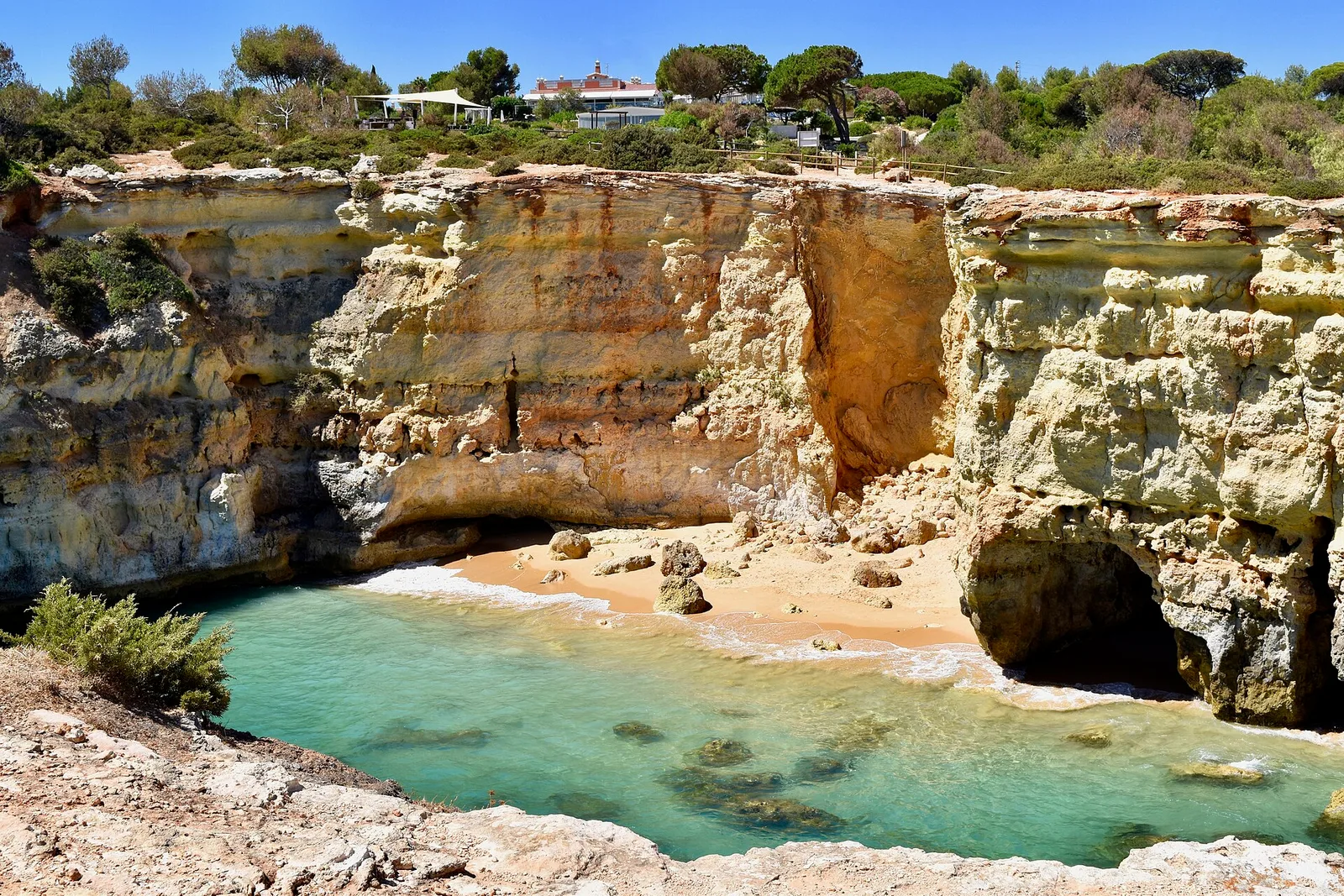
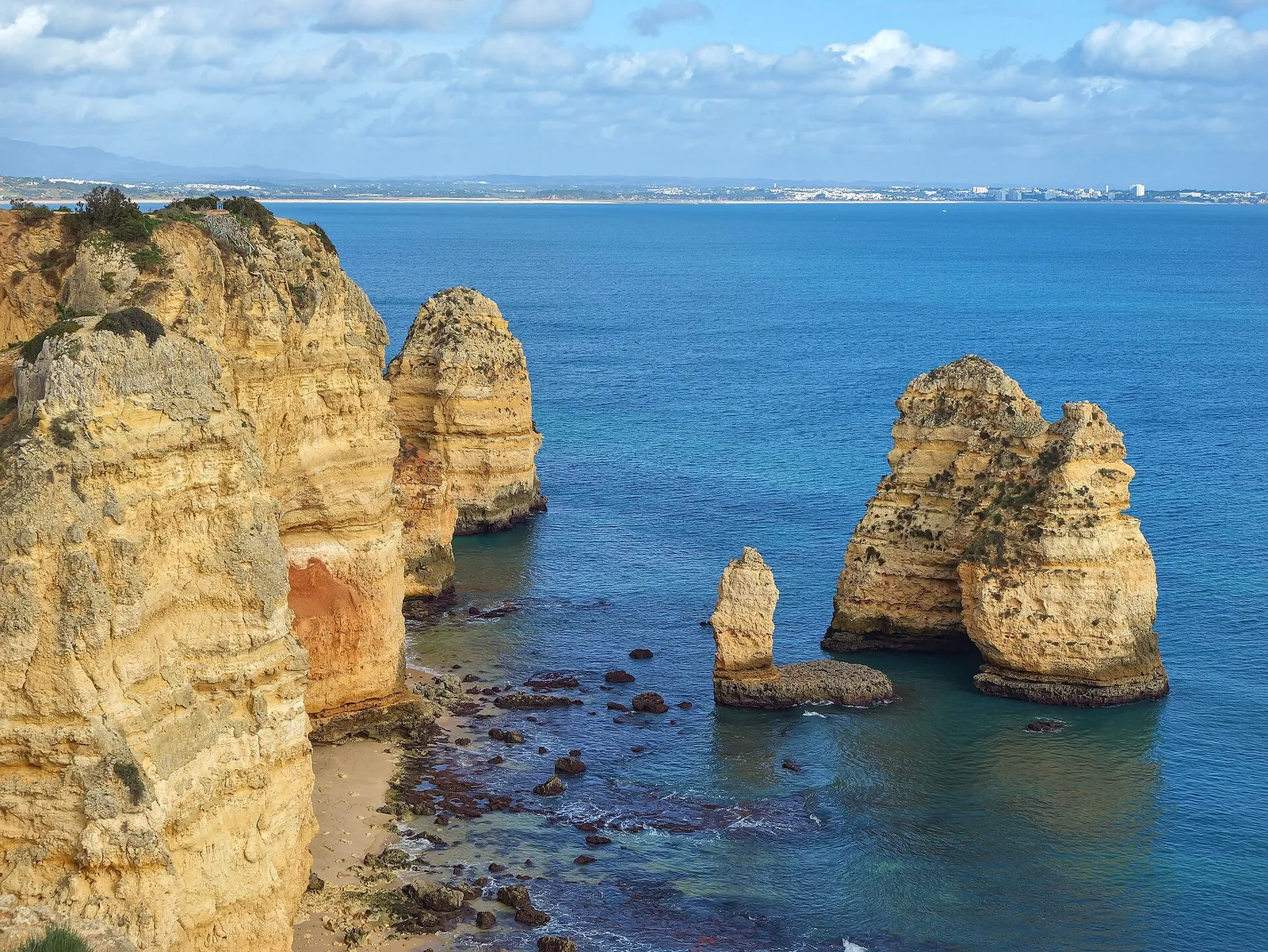
The central Algarve, roughly from Albufeira to Lagos, is the postcard: dramatic ochre cliffs, sea stacks, the famous coves of Praia da Marinha and Benagil, and the busiest resorts. The eastern Algarve, out toward the Spanish border, is flatter and gentler, with the sandbar islands of the Ria Formosa lagoon and quieter, more Portuguese towns like Tavira. The western Algarve and the Costa Vicentina, around Sagres, is wild, windswept and beloved by surfers, where the land runs out at Europe’s southwestern tip.
The practical consequence is that “the Algarve” is not one recommendation. A family wanting calm shallow water and a real town should be looking east; a couple wanting cliffs, coves and boat trips should be central; a surfer or a walker should be west. Choosing the wrong third is the most common way people come home lukewarm about a coast everyone else loves.
Getting here
Most visitors fly straight into Faro, which sits in the middle of the coast and puts almost everywhere within an hour or two by road. It is the simplest arrival by a distance, and the airport is small enough to be painless.
The other common route is via Lisbon, either as a two-centre trip or because the flight was better. From the capital it is roughly three hours by road, and there are direct trains south to Faro and along to the coast, which is a comfortable and scenic alternative to driving. If that is your route, sorting the first leg matters: our guide to Lisbon airport transfers covers getting from the terminal into the city or onward, including which option makes sense with luggage and a late landing.
The beaches worth the detour
You could spend a fortnight and not run out of sand, but a few beaches belong on any first list. Praia da Marinha is the coast’s poster beach, all golden arches and clear water. Praia da Dona Ana and Praia do Camilo near Lagos are jewel-box coves framed by cliffs. Praia da Rocha in Portimão is the big, buzzy, easy-access classic. Out east, the island beaches off Tavira and Ilha de Faro give you space and calm. On the west coast, Praia do Amado near Sagres is a surf and sunset favourite.
Four more reward the extra drive. Praia da Falésia runs for kilometres beneath striped red and ochre cliffs, and is the place to go when the coves feel crowded. Ilha Deserta, a boat ride from Faro, is a sandbar island with a single restaurant and nothing else. Praia do Beliche near Sagres is a dramatic amphitheatre of cliff at the end of the world. And Odeceixe, where a river meets the Atlantic on the border with the Alentejo, gives you a sheltered river swim and an ocean beach in the same place.
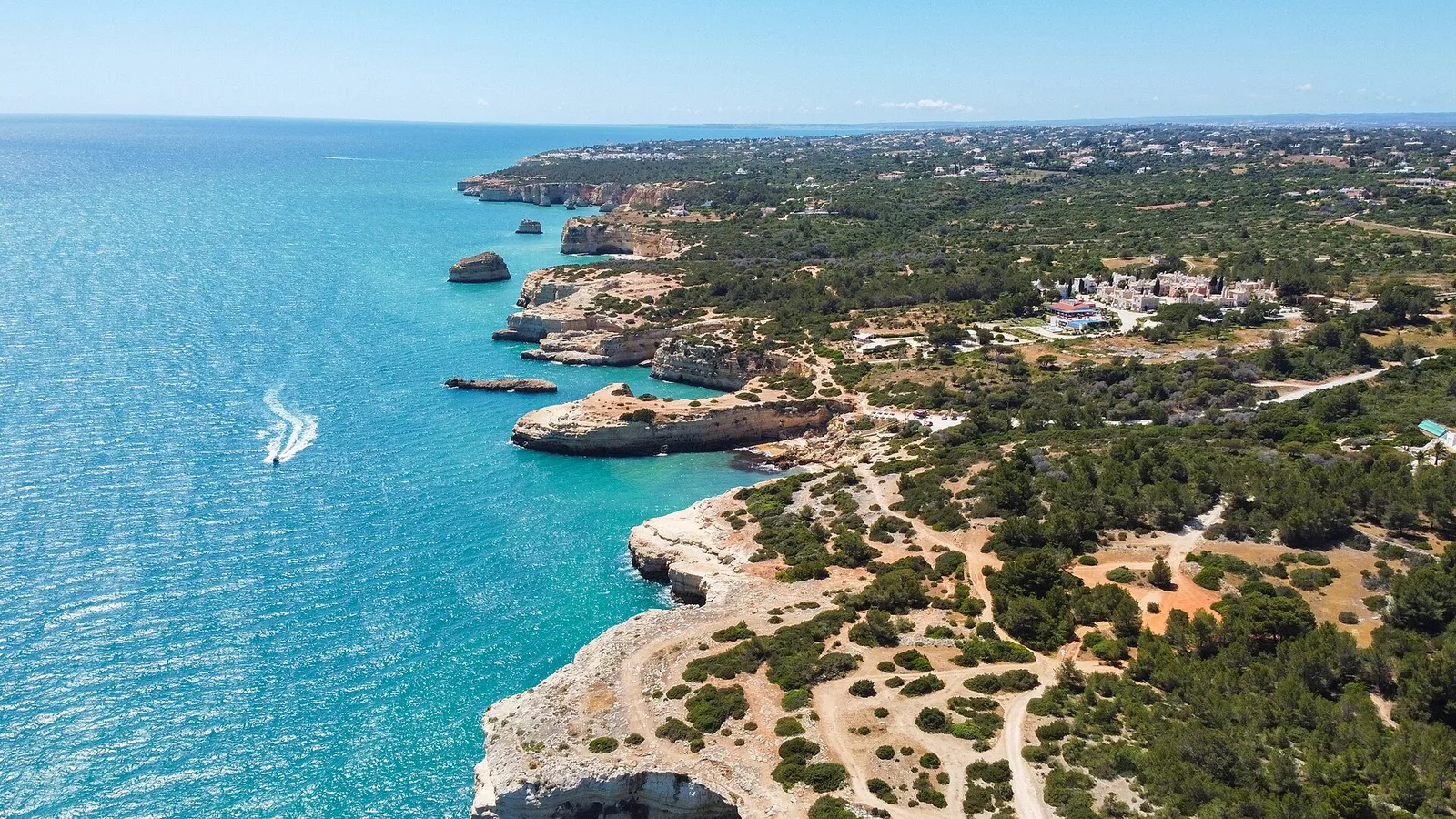
The Benagil cave and the sea
The Algarve’s cliffs are riddled with caves and grottoes, and the star is the Benagil sea cave, a cathedral-like chamber with a hole in its roof and a beach inside, reachable only from the water.
Read this bit before you plan your day, because the rules tightened in 2024 and a lot of older advice online is now wrong. Swimming into the cave is banned, and so is turning up with a rented kayak or paddleboard and going in by yourself. The only legal ways in are a licensed boat trip or a guided kayak or SUP tour from Benagil, Carvoeiro or Portimão. Motorised boats have to hold off the arches and cannot go inside, so they show you the cave from just outside; if you want to actually stand on the sand under the hole in the roof, book a guided kayak or paddleboard tour. Time inside is capped at a few minutes per group, and operators who break the rules face heavy fines, which is why a good guide will be firm about it.
Go early when the sea is calmest and the light streams through the roof, and remember the whole thing depends on conditions, so keep it flexible.
While you are on the water, the same operators run dolphin-watching sails and coastal cruises, especially out of Lagos, where the sea stacks of Ponta da Piedade are the loveliest stretch of the entire coast.
See the cliffs from the waterA boat or kayak tour to the Benagil cave and the Ponta da Piedade stacks is the Algarve's must-do dayWhere to base yourself
Your base sets the tone of the whole trip:
- Lagos is the all-rounder: gorgeous coves, a lively old town, boat trips and good food, popular with younger travellers.
- Albufeira is the biggest resort, with the widest range of hotels, beaches and nightlife, busy and unashamedly holiday-mode.
- Carvoeiro and Ferragudo are prettier, calmer bases near the best central-coast coves.
- Tavira in the east is the charmer: a genuine Portuguese town with an island beach a short ferry away.
- Sagres suits surfers and anyone chasing quiet, wide skies and end-of-the-world drama.
Faro is where most people fly in, but it is more transport hub than beach town, worth an afternoon for its walled old centre rather than a full stay.
| If you want | Base here | The trade-off |
|---|---|---|
| Everything in one place | Lagos | Busy in summer, popular with groups |
| Nightlife and big resorts | Albufeira | Least Portuguese part of the coast |
| Coves and calm | Carvoeiro or Ferragudo | Quiet evenings, less choice of restaurants |
| A real town and calm water | Tavira | Beaches need a short ferry |
| Surf, wind and emptiness | Sagres | A long way from everything else |
Beyond the beach
Give at least one day to the interior. Silves, the old Moorish capital, has a red sandstone castle above orange groves. The market town of Loulé and the hill villages of the Serra de Monchique offer cork oaks, thermal spas and cooler air. And a cliff-top walk on the Seven Hanging Valleys trail between Marinha and Carvoeiro is the finest way to see the coast on foot.
Two more days out are worth building in. The Ria Formosa lagoon behind Faro, Olhão and Tavira is a protected wetland of channels, salt pans and sandbar islands, best seen on a small boat, and it is full of birdlife and completely unlike the cliff coast. And Cabo de São Vicente, the wind-blasted headland beyond Sagres, is the southwesternmost point of mainland Europe, a lighthouse on a cliff above the Atlantic with nothing beyond it. Go for sunset and take a jacket, because it is always windier than the rest of the coast.
Eating on the coast
Algarve food is Atlantic and generous. Grilled fish and sardines are the everyday pleasure, and the regional showpiece is the cataplana, a copper clam-shaped pot of seafood and sausage steamed at the table. Clams cooked with garlic and coriander are on every menu for good reason, and inland the cooking turns to pork, game and hearty soups.
Two local specialities are worth a detour. The Algarve makes almond and fig sweets that trace back to its Moorish centuries, and the hills around Monchique produce medronho, a fiery spirit distilled from the fruit of the strawberry tree. As everywhere in Portugal, the couvert on the table is optional and charged if you eat it, and the best value is one street back from the promenade. Our Portuguese food and wine guide covers how the country’s dishes and wines fit together.
Getting around
A car unlocks the coast, and it is the honest recommendation: the coves, the trails and the villages are spread out and thinly served by public transport, and half the pleasure is the freedom to chase a viewpoint.
Without one, you are not stuck. A railway line runs the length of the coast from Lagos through Portimão and Faro to the Spanish border, linking the main towns cheaply if slowly, and buses cover some of the gaps. The workable carless plan is to pick one town with a beach you are happy to return to, then buy the specific days you need: a boat trip for the caves, a day tour for the interior, a taxi for a beach the bus does not reach.
Staying safe on the cliffs and in the water
Two hazards here are worth taking seriously, and neither is exotic. The first is the cliffs themselves. That soft golden rock is what makes the coast beautiful and it is also unstable: sections collapse without warning, there have been fatalities, and the warning signs asking you not to sit at the base are not decoration. Keep your towel well away from the cliff foot, stay behind fences on the clifftop paths, and do not climb down informal routes to a cove that has no proper access.
The second is the Atlantic. Beaches with lifeguards fly flags, and the flags mean what they say; rip currents are real, particularly on the west coast, and the water is colder and rougher there than on the sheltered south-facing beaches. Add sun that is stronger than the sea breeze suggests, and shade that is scarce once the tide pushes you off the cliff base, and you have the three things most likely to spoil a day.
When to go
Aim for May, June, September or early October: warm sea, sunshine and space, without the peak-summer crush and prices. July and August are hot, crowded and pricey but reliably sunny if that is when you can travel; book accommodation and boat trips well ahead. Winter is mild, cheap and quiet, better for golf and cliff walks than swimming.
Two seasonal notes specific to this coast. The sea is at its warmest in late August and September, well after the air has peaked, which is a strong argument for early autumn. And in winter a good number of restaurants and boat operators in the resort towns simply close, so the quiet comes with a genuinely reduced choice, while the coastal walking is at its best.
Coast or city, if you have to choose?
If your Portugal trip cannot fit both, be honest about what you want from it. The Algarve is a holiday rather than a sightseeing trip: beaches, boats, long lunches and very little urgency, and it rewards staying put. A city trip is the opposite, dense with things to see and best done on foot.
The good news is that the country is small enough to combine, and a week of city and a week of coast is one of the best two-centre trips in Europe. If the city half is still undecided, our comparison of Lisbon and Porto sets the two against each other, with the practical footnote that Lisbon is far closer to the Algarve than Porto is.
The short version
Pick your third of the coast before you pick your hotel: central for cliffs and coves, east for calm water and real towns, west for surf and emptiness. Rent a car if you can, book the Benagil cave on a licensed boat or guided paddle tour early in your stay, check the tide as well as the forecast, keep well clear of the cliff bases, give one day to the hills and one to the lagoon, and aim for May, June, September or early October. Do that and the Algarve delivers exactly the sun-soaked, cliff-and-cove trip you came for.
Which Algarve are you after, the coves or the quiet end?