Portugal is one of the easiest countries in Europe to enter, but 2026 is the year the paperwork is changing shape. The old passport stamp is giving way to biometric registration, and a new online travel authorisation is on the runway. None of it is difficult, and almost all of it can be sorted before you leave home. Here is exactly what applies to you, whichever passport you carry.
First, which group are you in?
Entry to Portugal follows the Schengen rules, and every traveller falls into one of three groups.
EU and EEA citizens (plus Switzerland) have free movement: arrive with a valid passport or national ID card, stay as long as you like, no forms, no counting days.
Visa-exempt nationalities, around 60 countries including the United States, United Kingdom, Ireland, Canada, Australia, New Zealand, Japan, South Korea, Brazil and Singapore, need no visa for short stays. You may spend up to 90 days in any 180-day period in the Schengen Area for tourism, family visits or business meetings.
Everyone else needs a Schengen short-stay visa (type C) arranged before travel through a Portuguese consulate or an outsourced visa centre such as VFS Global. Apply four to eight weeks ahead with proof of accommodation, return travel, funds and travel medical insurance covering at least 30,000 euros.
The group that trips people up is the third one, because it is easy to assume everyone reading an English-language travel site is visa-exempt. South African passport holders are not: a Schengen visa is required for Portugal, applied for in advance, and the same goes for Indian, Nigerian, Kenyan, Chinese and many other passports. If you are visiting several Schengen countries, apply to the one where you will spend the most nights.
Not sure which group your passport is in? The European Commission keeps an up-to-date list, and the airline check-in desk will certainly know, so confirm before you book rather than at the gate.
If you are in the third group
Applying is methodical rather than difficult, and the timing is the part that catches people. Book the appointment early, because slots at consulates and outsourced visa centres disappear months ahead in the spring and summer, and assemble the file before the date: passport with comfortable validity, photographs to specification, proof of accommodation for every night, onward or return travel, evidence of funds, and the medical insurance covering at least 30,000 euros that the application requires rather than merely suggests.
Two rules save trouble. Apply to the country where you will spend the most nights, not the first one you land in, since that is the rule the consulates apply. And do not book non-refundable flights before a decision, however confident you feel: a refusal is uncommon and a delay is not.
The 90/180 rule, without the headache
The rule that trips people up is not the visa, it is the counting. Visa-exempt visitors get 90 days inside the whole Schengen Area, not 90 days per country. A week in Spain, a week in France and ten weeks in Portugal adds up to a problem.
The window is rolling: from any date, look back 180 days and count every day you were inside Schengen. If the total is over 90, you have overstayed. The practical advice is simple: keep a note of your entry and exit dates, use the EU’s free short-stay calculator when planning back-to-back trips, and remember that arrival and departure days both count as full days. With the new digital border system, the counting is no longer done by a bored officer squinting at stamps; it is automatic.
EES: the border is now biometric
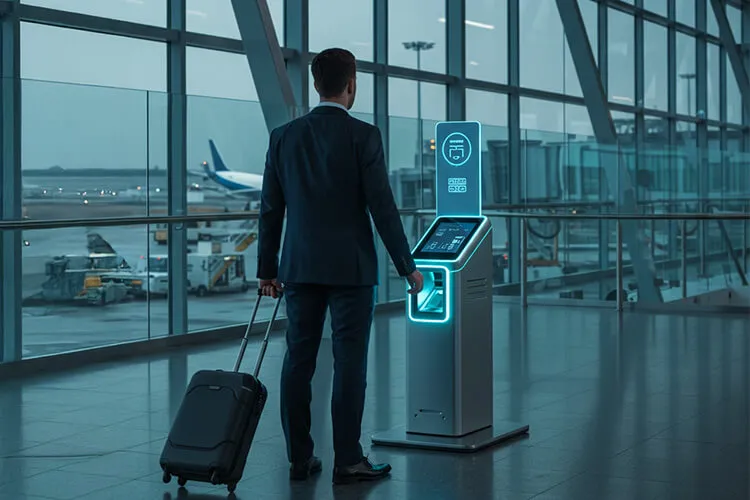
The Entry/Exit System (EES) is the biggest visible change at Portuguese airports. Phased in across the Schengen Area from October 2025 and fully operational since 10 April 2026, it replaces passport stamps with a digital record for every non-EU visitor.
At your first crossing, a kiosk or officer captures your facial image and fingerprints and links them to your passport. On later trips, a quick scan matches you against the record. What it means in practice:
- Allow extra time on your first arrival while queues adjust; first-time registration adds a few minutes per person.
- Your days are counted automatically. Overstays are flagged the moment you exit, so the 90/180 rule now has teeth.
- No stamps means no souvenir ink, but also no arguments about an illegible stamp from a trip two years ago.
Children generally register too, though fingerprints are not taken under age 12. EU citizens and residents with EU residence permits are outside the system entirely.
ETIAS: not in force, and the date has slipped again
ETIAS is the EU’s planned online travel authorisation for visa-exempt visitors, comparable to the US ESTA or the UK ETA. It has been announced, delayed, re-announced and delayed again, and the current position is blunt: it is not running. The EU had been pointing at late 2026, but in mid 2026 that target was withdrawn from the official pages, which now say only that the start date will be announced several months in advance.
So for a trip booked today there is nothing to apply for and nothing to pay. Anyone selling you an ETIAS right now is running a scam, and copycat sites charging inflated fees appeared years before the system existed.
When it does go live, the process is designed to be painless: an online form, a 20 euro fee (free under 18 and over 70), approval usually within minutes, validity for three years or until your passport expires, plus a transitional grace period after launch. The honest guidance for anyone booking a Portugal trip: check the official EU ETIAS website a few weeks before you fly and treat anything else, including this page, as a snapshot.
Passports, minors and what officers may ask
Non-EU passports must be valid for at least three months beyond your departure from Schengen and issued within the last ten years. Airlines often prefer six months of validity, so renew early if you are close.
Border officers rarely ask visitors much, but they are entitled to request proof of accommodation, onward or return travel, and sufficient funds (a card statement is fine). Families should carry each child’s passport; if a minor travels with one parent or without their parents, carry a signed consent letter to be safe. If you plan to drive, whether you need an International Driving Permit depends on where your licence was issued rather than where you are going, so check that alongside your car rental plans.
Insurance: the requirement that depends on your passport
This is the entry rule that varies most by nationality, and the one visitors most often get wrong in both directions.
For visa applicants it is mandatory and documented: cover of at least 30,000 euros for medical treatment and repatriation, valid across the whole Schengen Area for the length of the stay. No cover, no visa.
For visa-exempt visitors there is no form, but a border officer may still ask, and the real question is what happens if you need a hospital. EU citizens with an EHIC and UK residents with a GHIC can use Portuguese state healthcare on the same terms as locals, which is useful and is not the same as full cover, since it does not include repatriation, cancellation or a private clinic. Travellers from the US, Canada, Australia, New Zealand and South Africa have no such arrangement to fall back on and should treat insurance as part of the trip rather than an optional extra. Our guide to travel insurance for Portugal covers what a policy should include here, and the exclusions worth reading twice if driving or watersports are on the itinerary.
Entry requirements at a glance
| Traveler | Visa needed? | EES biometrics | ETIAS (if and when it launches) |
|---|---|---|---|
| EU / EEA / Swiss citizens | No, ID card or passport | No | No |
| US, UK, Ireland, Canada, Australia, NZ, Japan and other visa-exempt | No, up to 90/180 days | Yes | Yes, 20 euros online |
| South Africa, India and other visa-required nationalities | Yes, Schengen type C before travel | Yes | No (visa replaces it) |
| Long stays (work, study, nomad) | National visa via consulate | Yes | No |
Arriving in Portugal
Most visitors land at Lisbon, Porto or Faro. All three handle EES kiosks, and Lisbon, the busiest, is where extra arrival time matters most in peak season. Arrivals from within Schengen (Madrid, Paris, Rome and so on) face no passport control at all, since checks happen at your first Schengen entry point.
There is no arrival card, no proof-of-vaccination requirement, and customs allowances are the standard EU ones. Once you are in, you are free to roam the whole country, from the Algarve to the Douro, and hop into Spain without another check.
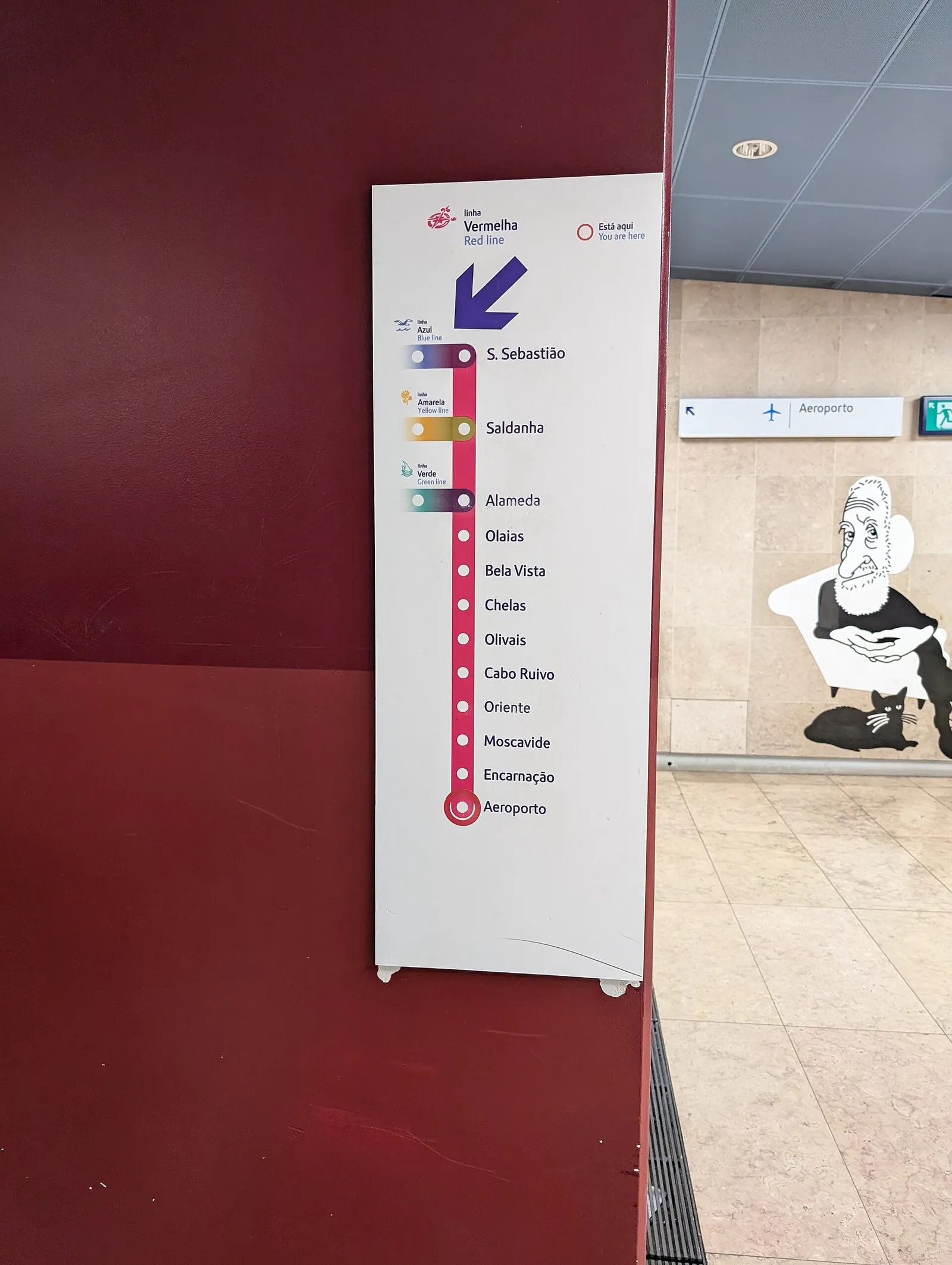
What comes after the passport desk is worth a moment’s planning too, particularly at Lisbon, where the airport sits close to the city and the options at the kerb vary a great deal in price. Our guide to Lisbon airport transfers covers the metro, taxis and pre-booked options, including which makes sense with luggage or a late landing.
If something goes wrong
Two situations are worth thinking through once, in advance. If your passport is lost or stolen, report it to the police, keep the report, and contact your own country’s embassy or consulate for an emergency travel document. Which nationalities are represented in Lisbon and which are covered from another capital varies, so if it matters to you, look it up for your own passport before you fly rather than on the day.
Refusal of entry is rare for a visa-exempt tourist with a return ticket and an address to give, and the practical protection is having those things reachable on your phone rather than in a checked bag. If it does happen, the decision is issued in writing with the ground recorded and an appeal route set out; arguing at the desk does not help.

The short version
EU citizens walk in. US, UK, Irish, Canadian, Australian and New Zealand travellers get 90 visa-free days in every rolling 180, now counted automatically by the biometric EES. South Africans and several other nationalities need a Schengen visa arranged weeks ahead, so check your own passport first. ETIAS is still not in force and has no announced date, so verify the status before you fly rather than assuming either way. Keep your passport fresh, your insurance real and your Schengen days counted, remembering that both your arrival and departure days count as full ones, and the border will be the least memorable part of your trip.